
How To
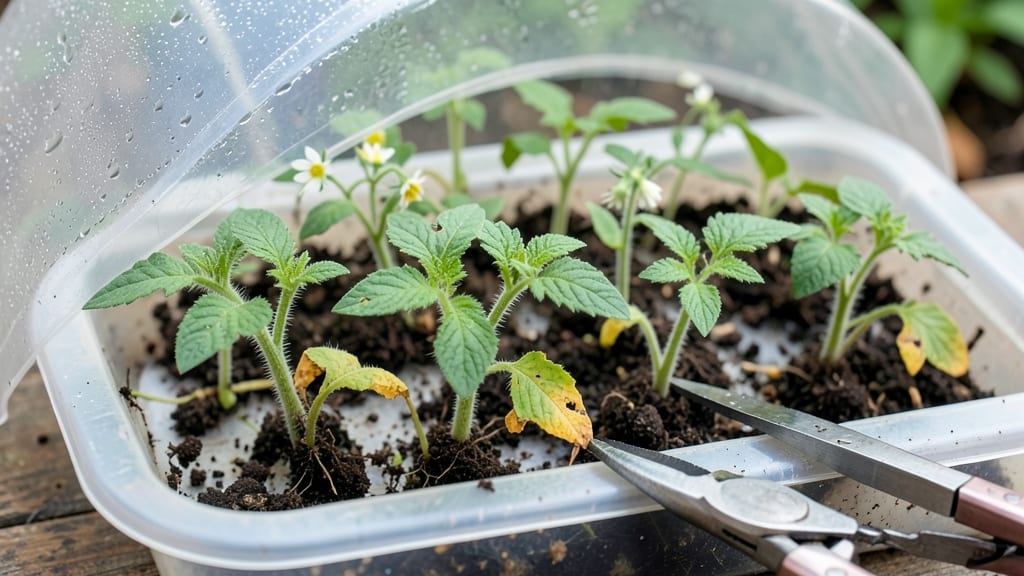
Starting tomato seeds indoors in Ohio means timing them 6-8 weeks before your last frost—around mid-February for most of the state 🍅.
Ohio gardeners know timing is everything—plant tomato seeds too early, and they’ll bolt before summer; too late, and you’ll miss peak harvests. But with Ohio’s unpredictable frost dates (ranging from late April to early June), calculating the perfect indoor start window isn’t just guesswork—it’s a science.
Get it wrong, and you’re either stuck with leggy seedlings or a garden full of empty vines. The good news? With Ohio’s USDA Zone 6a climate, a little planning turns that guesswork into a foolproof schedule—one that ensures your tomatoes hit the ground running when the frost finally lifts.
Below, I’ll walk you through the exact indoor start dates for Ohio, how to adjust for your microclimate, and the simple steps to keep your seedlings strong until transplant time.
Ohio’s frost dates & tomato seed starting timeline by variety
Ohio’s USDA zones 5-7 create a 10-day window for last frost dates—from April 15 in northern areas (zone 5) to May 10 in southern regions (zone 7). This variance means your tomato seed starting timeline should shift 2-3 weeks depending on where you live.
For example, gardeners in Columbus (zone 6a) should aim for mid-February starts, while those in Toledo (zone 5b) need to begin by late January.
Tomatoes thrive when transplanted after soil warms to 55°F+, but Ohio’s unpredictable spring means relying on average frost dates is risky. Use the Ohio State University Extension frost calculator to refine your schedule.
For instance, a heirloom variety like Brandywine (needs 90 days to mature) requires an earlier start than a hybrid like Early Girl (60 days to harvest).
Here’s the golden rule: Start seeds 6-8 weeks before your last frost date. This accounts for seedling growth, hardening off, and soil warming. For northern Ohio, that’s late January to early February; for southern Ohio, mid-February to early March.
Miss this window, and you’ll either have overgrown seedlings or stunted plants struggling to catch up.
Microclimates matter. Urban areas like Cincinnati often experience later frosts due to heat islands, while rural Appalachian regions can see frost 2 weeks earlier. Adjust your timeline by 1-2 weeks if you’ve noticed local patterns. For example, if your neighbor’s tomatoes bloom in early June while yours lag, you’re likely in a cooler microclimate.
Ohio’s first frost typically arrives October 15-30, but heirloom varieties can keep producing until then if protected. This means your last planting window for direct-sown seeds is mid-July—though transplants can go in until early August in warmer zones.
Use row covers to extend the season if you’re eager for a fall harvest.
🌱
Variety-specific timelines are critical. Determinate tomatoes (like Roma) mature faster (70 days) and can start 2 weeks later than indeterminate varieties (like Sungold, 85 days). Hybrid Early Girl (60 days) is forgiving for late starts, while Cherokee Purple (80 days) demands precision. Always check the seed packet for days to maturity and subtract 6-8 weeks from your last frost date.
🌿
For accurate local adjustments, bookmark the Ohio State University Extension’s frost date map (available at go.osu.edu/frostdates). Enter your ZIP code to see historical frost data and 10-year averages.
For example, Akron (zone 6b) has a last frost date of April 22, while Dayton (zone 6a) averages April 15. This 7-day difference translates to a week’s head start for Dayton gardeners.
🌡️
Here’s how to calculate your start date:
- Find your last frost date (use the OSU tool).
- Subtract 8 weeks for heirloom/long-season varieties.
- Subtract 6 weeks for hybrids/early maturing types.
- Add 1 week if your home is cool (<65°F) or lacks grow lights.
For example: If your last frost is April 20, start Early Girl seeds by February 20, but Brandywine seeds by January 25.
⏰
Pro tip: Sow a few seeds every 2 weeks to stagger harvests. This successive planting strategy ensures you’re not overwhelmed with ripe tomatoes all at once and extends your harvest season by 3-4 weeks. Label your seed trays with variety names and start dates to track progress.
🌱
Regional adjustments are key. In northeast Ohio (e.g., Cleveland), aim for January 20-February 10 starts. In southwest Ohio (e.g., Cincinnati), February 10-March 1 works best. Central Ohio (e.g., Columbus) falls in between: January 25-February 15. Always err on the earlier side—you can delay transplanting if seedlings outgrow their containers, but you can’t speed up a late start.
🌿
Use this summary table to align your tomato seed starting timeline with Ohio’s USDA zones and variety needs:
Step-by-step indoor seed starting guide for Ohio’s climate
Ohio’s unpredictable frost dates and short growing season demand precision when starting tomato seeds indoors. Unlike milder climates, Ohio’s USDA zones 5-7 require careful timing to avoid leggy seedlings or late-season bolting.
The key? Mimicking Ohio’s spring soil temperatures (60-70°F) indoors while ensuring seedlings get 12-16 hours of light daily—something natural windows often can’t provide.
I’ve learned the hard way that supplemental grow lights are non-negotiable in Ohio’s cloudy March skies. Without them, seedlings stretch toward weak sunlight, becoming etoliated (pale and weak). Pair that with Ohio’s humidity swings—dry indoor air can cause seedling stress—and you’ve got a recipe for failure.
But with the right setup, you can transplant robust seedlings just as Ohio’s last frost (typically April 15) passes.
When to Start Tomato Seeds Indoors in Ohio
-
Step 1: Calculate Your Start Date
Ohio’s last frost date varies by region—aim for 6-8 weeks before your local date (e.g., mid-February for most of Ohio). Use Ohio State University’s frost calculator for precision. -
Step 2: Prep Your Seedlings
Fill seed trays with sterile seed-starting mix (avoid garden soil—it’s too dense). Plant seeds ¼ inch deep in 2-inch pots for better root development. Label each pot with the variety name and date planted. -
Step 3: Control Temperature
Keep soil at 70-80°F using a seedling heat mat until germination (5-10 days). After sprouting, maintain 65-75°F days and 55-65°F nights to mimic Ohio’s spring. A south-facing window won’t cut it—supplement with grow lights 12-16 hours/day. -
Step 4: Manage Humidity
Ohio’s low indoor humidity (often <10%) can stress seedlings. Cover trays with plastic domes or use a humidifier to keep levels at 40-60%. Remove domes once seedlings develop true leaves to prevent fungal issues like damping off. -
Step 5: Harden Off Seedlings
2 weeks before transplanting, gradually expose seedlings to Ohio’s outdoor conditions. Start with 1 hour/day in a sheltered spot, increasing to 8+ hours by transplant time. This builds resistance to wind and temperature fluctuations common in Ohio’s spring. -
Step 6: Transplant After Frost
Wait until soil temps reach 60°F (use a soil thermometer) and nighttime temps stay above 50°F. In Ohio, this is typically late April to early May. Plant deeply—bury ⅔ of the stem to encourage root growth. Water thoroughly after transplanting to reduce shock.
Ohio’s transplant shock is real—seedlings that thrive indoors can wilt outdoors if not acclimated properly. I once lost a batch of heirloom tomatoes because I skipped hardening off, and the sudden wind chill in early May stunned them.
Since then, I’ve made it a rule to monitor weather forecasts and have a backup row cover ready for unexpected late frosts.
Don’t overlook light quality either. Ohio’s LED grow lights (like full-spectrum bulbs) outperform CFLs for tomato seedlings. Position lights 2-3 inches above seedlings and adjust height as they grow.
If your seedlings start leaning toward the light, rotate trays daily to ensure even growth—a common issue in north-facing windows.
Finally, Ohio’s soil fertility varies wildly by region. Before transplanting, amend your garden beds with compost or aged manure to replenish nutrients. Tomatoes are heavy feeders, and Ohio’s clay-heavy soils in some areas can compact easily.
A mulch layer (like straw) helps retain moisture and regulate soil temperature—critical during Ohio’s unpredictable spring rains.