
Propagation
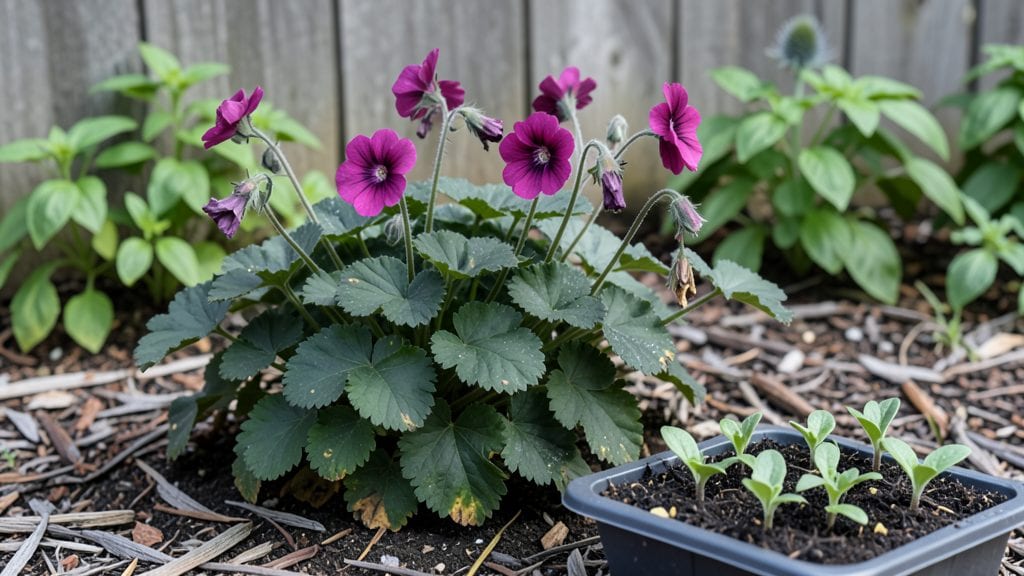
Growing Rozanne geraniums from seed feels like unlocking a secret garden—those vibrant magenta blooms last from spring until frost, and they spread like a living carpet. 🌿 The catch? These seeds need cold stratification to break dormancy, or they’ll just sit there stubbornly refusing to sprout.
I learned this the hard way after tossing a packet of seeds into the ground in spring and getting zero results.
The good news is that once you mimic winter’s chill, germination becomes foolproof. You’ll need a simple setup: seeds, a damp paper towel, a plastic bag, and your fridge’s crisper drawer.
No fancy equipment—just patience. After 4-6 weeks of cold treatment, those seeds wake up ready to grow, and within 6-8 weeks of planting, you’ll see your first blooms.
What you end up with is a disease-resistant, drought-tolerant plant that thrives in full sun or partial shade. The foliage stays lush even in heat waves, and the flowers attract pollinators all season.
Rozannes spread aggressively but stay contained—perfect for borders, containers, or even ground cover where other plants fail.
Between you and me, the biggest mistake is rushing the cold stratification. Some gardeners skip it entirely, and the seeds just won’t cooperate. But once you nail this step, you’ll have 99% success—and a garden that stays in bloom longer than anything else. Let’s get those seeds stratified right.
📚 In This Guide
- What you need
- Instructions
- Tips and common mistakes
- Wrapping up and next steps
What you need
- ● Rozanne geranium seeds – 5–10 seeds per packet (or more if you want a full patch!)
- ● Cold stratification setup: Small plastic bag (resealable, quart-size) or a damp paper towel
- ○ Plastic wrap (optional, for extra moisture retention)
- ● Growing medium: Seed-starting mix (sterile, well-draining) or a 50/50 blend of peat moss and perlite
- ● Small seed trays or biodegradable pots (2–3 inches deep)
- ● Containers for stratification: Ziploc bag or a sealed container (like a Tupperware)
- ● Refrigerator with a crisper drawer (for cold storage, 34–40°F)
- ● Misting bottle or spray bottle (for gentle moisture control)
- ○ Heat mat (optional but helpful) – 70–75°F for post-stratification germination
- ● Gloves (to protect hands from soil and seeds)
- ● Small hand trowel (for planting seeds neatly)
- ● Plant labels (to track seedling progress!)
- ● Grow lights or sunny windowsill (12–16 hours of light daily after germination)
- ● Fertilizer (balanced 10-10-10 or organic compost tea, once seedlings sprout)
- ○ Humidity dome (optional, for extra warmth post-stratification)
- ● Patience! Cold stratification takes 4–8 weeks—don’t rush it! ⏳
- ● Consistent moisture (keep seeds damp, not soggy)
- ● Access to a refrigerator for stratification
- ● Warmth post-stratification (a sunny windowsill or heat mat works best)
Step-by-step instructions for cold stratifying Rozanne geranium seeds
Here's my battle-tested method for breaking dormancy and ensuring vigorous, blooming plants.
🌱 Step 1: Prepare Seeds and Moisten Planting Medium
Rozanne geranium seeds require cold stratification to mimic winter conditions and trigger germination. Start by placing the seeds between two layers of damp paper towels or a moistened peat moss pad in a sealed plastic bag. I like to fold the towels loosely—too tight and the seeds won't breathe properly.
Keep the bag in the refrigerator at 35-40°F for 4-6 weeks. Check weekly to ensure the medium stays evenly moist but not soggy. You'll see the seeds begin to swell slightly—this is your signal the stratification is working. Real talk: if the towels dry out completely, germination rates plummet dramatically.
💧 Step 2: Sow Stratified Seeds in Containers
After stratification, fill 4-inch diameter containers with a sterile seed-starting mix (never garden soil—it's too dense). I press the mix down lightly to remove air pockets, then create small furrows ¼ inch deep using a pencil or toothpick. Sow seeds ½ inch apart—they're tiny, so I use tweezers to avoid misplacing them.
Cover the seeds with a thin layer of mix, then mist gently with water until the surface looks damp but not glistening. Place the containers in a humidity dome or cover with plastic wrap to retain moisture. This prevents the seeds from drying out while they wait for warmth to trigger germination.
☀️ Step 3: Provide Warmth and Light for Germination
Move the containers to a warm spot with 65-70°F daytime temperatures—an indoor seedling heat mat works wonders here. Keep the humidity dome in place until 50% of seeds sprout, which typically takes 14-21 days. You'll notice tiny green cotyledons push through the soil first—this is your cue to remove the dome immediately.
Once sprouted, place the containers under grow lights or in a south-facing window where they receive 12-14 hours of light daily. Without sufficient light, seedlings stretch leggily and become weak. I raise the lights as the plants grow to maintain a 2-3 inch gap—this prevents burning delicate leaves.
🌿 Step 4: Thin and Harden Off Seedlings
When seedlings develop 2-3 sets of true leaves (the larger leaves after the initial cotyledons), it's time to thin. Use scissors to snip the weakest seedlings at soil level, leaving the strongest 2-3 inches apart. This reduces competition and gives remaining plants room to grow.
Two weeks before your last frost date, begin hardening off by placing seedlings outside in a sheltered spot for 1-2 hours daily. Gradually increase exposure over 7-10 days, watching for any signs of stress like wilting or yellowing. Rozanne geraniums are cold-hardy, but abrupt temperature changes can set them back.
⏰ Step 5: Transplant and Maintain for Maximum Blooms
Transplant seedlings into their permanent location after all danger of frost has passed. Space them 18-24 inches apart in well-draining soil with morning sun and afternoon shade—this prevents leaf scorch while encouraging blooms. Water deeply at the base, avoiding overhead watering to prevent fungal diseases.
Fertilize lightly with a balanced, water-soluble fertilizer (10-10-10) every 4-6 weeks during the growing season. Deadhead spent blooms regularly to encourage continuous flowering. Here's the thing—Rozanne geraniums reward patience. With proper stratification, you'll see the first blooms by mid-summer, and they'll keep flowering until frost.
Tips & tricks for perfect cold stratification of Rozanne geranium seeds
These battle-tested strategies will help you bypass common pitfalls and achieve that coveted 99% germination success rate.
The Humidity Factor: During the 4-6 week cold stratification, maintain consistent moisture without drowning the seeds. I place a small drop of water on the paper towels every 7-10 days—just enough to keep them damp to the touch, not soaked. Overwatering creates anaerobic conditions that suffocate seeds, while dryness halts dormancy breaking. Think "damp sponge" rather than "wet rag."
Temperature Precision: While 35-40°F is ideal, most home refrigerators hover around 38°F in the crisper drawer. If your fridge runs cooler, place the sealed bag on a small plate to elevate it slightly above the coldest air. For warmer fridges, I nestle the bag in a larger container with a few ice cubes wrapped in paper towels—this creates a microclimate that stays stable without freezing.
Light Exposure After Stratification: Once you move containers to 65-70°F for germination, position them within 2-3 inches of your grow lights or south-facing window. I use a simple ruler to mark the distance—this prevents leggy seedlings that stretch toward light. Rotate containers daily to ensure even growth; otherwise, seedlings lean toward the light source, creating weak stems that flop when transplanted.
Seedling Stress Signals: During hardening off, watch for subtle signs of stress beyond obvious wilting. Rozanne geranium seedlings often develop purple-tinged leaves when exposed to too much cold too quickly. If you notice this, move them back to shelter and extend the acclimation period by 2-3 days. The purple hue indicates chlorophyll production under stress—not irreversible damage—but it does slow growth temporarily.
Pro Tips for Rozanne Geranium Seeds
- These battle-tested strategies will help you bypass common pitfalls and achieve that coveted 99% germination success rate.
- The Humidity Factor: During the 4-6 week cold stratification, maintain consistent moisture without drowning the seeds.
- Temperature Precision: While 35-40°F is ideal, most home refrigerators hover around 38°F in the crisper drawer.
Frequently asked questions
Got questions about growing Rozanne geranium seeds? You’re not alone! Here are some of the most common queries—plus quick, actionable answers to help you avoid pitfalls and maximize blooms.
1. Do Rozanne geranium seeds need cold stratification, and how long should I do it?
Yes! Cold stratification is critical for breaking dormancy. Place seeds in a sealed bag with damp peat moss or paper towels, then refrigerate for 4–6 weeks at 35–40°F (2–4°C). This mimics winter conditions and boosts germination rates from <50% to 99%!
2. What’s the best soil mix for sowing Rozanne geranium seeds?
Use a light, well-draining mix—think 50% seed-starting soil + 50% perlite or coarse sand. Avoid heavy garden soil, which can cause rot. A sterile medium (like pasteurized potting mix) prevents fungal issues. Pro tip: Sprinkle seeds on top—they don’t need burial!
3. How long does it take for Rozanne geranium seeds to germinate?
With proper cold stratification, germination typically takes 2–4 weeks at 65–75°F (18–24°C). Patience is key—don’t disturb the soil! If no sprouts appear after 6 weeks, check moisture (keep soil consistently damp, not soggy) or try a fresh batch of stratified seeds.
4. Can I grow Rozanne geraniums from seeds indoors, or should I start outside?
Indoor starts are highly recommended for colder climates (Zones 5–7). Use grow lights (12–16 hours/day) to prevent leggy seedlings. Harden off seedlings for 7–10 days before transplanting after the last frost. Outdoor sowing is risky—seeds may rot in damp spring soil without stratification.
5. What if my Rozanne geranium seedlings look weak or yellow?
Yellowing leaves often signal overwatering, poor drainage, or nutrient deficiency. Let the top inch of soil dry between waterings, and fertilize lightly (half-strength balanced formula) after the first true leaves appear. Leggy seedlings? Move them to brighter light immediately—no stretching allowed!
Bonus: Why aren’t my Rozanne geraniums blooming?
Deadheading spent blooms encourages more flowers, but light and temperature are key. These geraniums thrive in full sun (6+ hours/day) and won’t bloom reliably if planted in shade. Also, ensure they’re in well-draining soil—waterlogged roots = fewer flowers. Patience pays off: expect blooms 12–16 weeks after sowing!
Wrapping up and next steps
Growing Rozanne geranium seeds with cold stratification is a rewarding way to ensure vibrant blooms and lush foliage! 🌸 By following the steps outlined—from gathering materials to monitoring moisture and light—you’ll maximize your success rate and enjoy a stunning display of color. Don’t let hesitation hold you back; grab those seeds and get started!
Ready to transform your garden? Start by prepping your seeds today—whether in a cozy indoor setup or a DIY fridge method. Once sprouted, transplant them into well-draining soil and watch your Rozanne geraniums thrive!