
Pruning
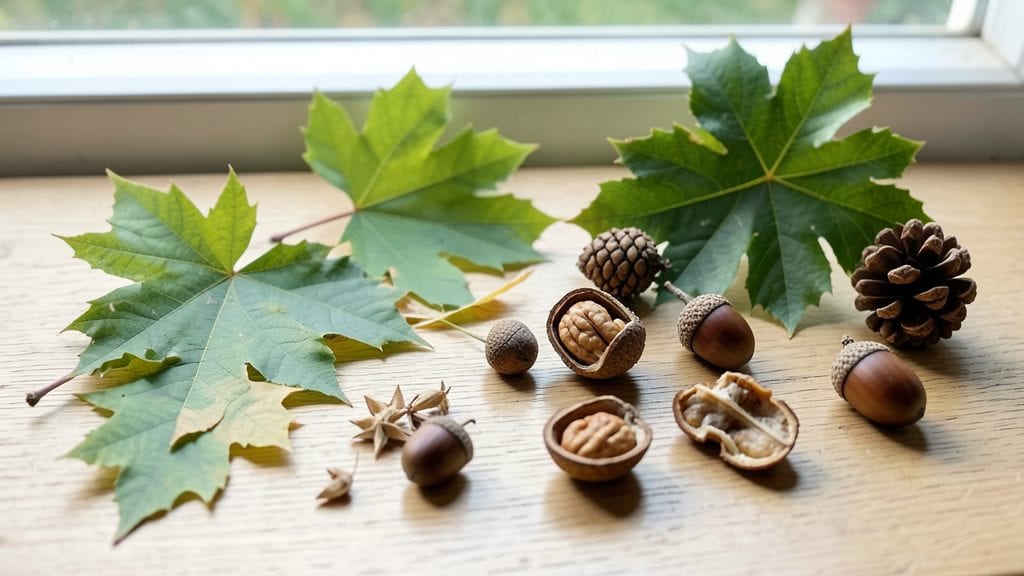
Identifying tree seeds starts with noticing their shape, size, and whether they have wings or not. 🌿 I’ve spent years collecting seeds—from acorns the size of golf balls to tiny maple samaras that flutter like helicopter blades—and each one tells a story about the tree that grew it.
Common seeds like acorns have smooth, rounded caps, while maple samaras spin in the wind with their distinctive double-winged design. Learning these traits helps you spot viable seeds and avoid toxic ones, like those from black walnut trees, which can ruin soil if planted.
A simple field guide or smartphone app can help match what you find to the right species.
Once you’ve identified them, collecting seeds at the right time—usually late summer or fall—boosts your chances of successful germination. Store them in a cool, dry place until planting season, and you’ll be ready to grow your own trees in just a few months.
This works for backyard gardeners, forest stewards, or anyone curious about the trees around them. Let’s turn those seeds into saplings!
Why it happens
Misidentifying tree seeds isn’t just about poor observation—it’s often the result of subtle yet powerful natural and environmental forces shaping how seeds appear and behave. Understanding these underlying causes can sharpen your ability to spot key differences and avoid costly mistakes.
Let’s break down the science behind why seeds trick even the most seasoned gardeners.
Seeds aren’t static; they evolve through distinct stages, each altering their shape, texture, and even color. Immature seeds may resemble their mature counterparts but lack defining features like hardness or wing structures.
- Early Development: Young seeds (e.g., acorns or walnuts) often appear softer, lighter, or less defined.
For example, a white oak acorn might look pale and underdeveloped compared to a mature, brown one. - Dormancy Tricks: Some seeds (like maple samaras) only fully form their wings after reaching maturity.
A premature samara might look like a tiny, underdeveloped leaf rather than a recognizable helicopter seed. - Pro Tip: 💡 Check for hardness—mature seeds are typically firmer. Press gently with your thumbnail: if it dents easily, it’s likely not fully grown.
Harsh conditions—drought, pests, or disease—can warp seeds into unfamiliar shapes or sizes. These "mutations" might make identification nearly impossible without context.
- Drought Effects: Trees under water stress produce smaller, malformed seeds. A pinecone’s seeds might shrink or fail to develop properly, mimicking a different species entirely. - Pest Damage: Insects or fungi can chew or discolor seeds, obscuring key features.
For instance, a hickory nut infested with weevils may look shriveled or hollowed out. - Disease Impact: Fungal infections (like anthracnose) can cause seeds to darken or develop unusual growths.
A sycamore seed might appear blackened or irregular if infected. - Actionable Tip: ✨ Compare with healthy specimens—if a seed looks "off," cross-reference it with a known healthy example from the same tree.
Nature loves mixing things up. Hybrid trees (crosses between species) produce seeds that blend traits, creating hybrids that defy easy classification.
- Hybrid Seeds: A red oak × white oak hybrid acorn might have a shape or color that doesn’t match either parent. These "in-between" seeds can fool even experts. - Regional Variations: Climate and soil differences cause subtle shifts in seed traits.
A black walnut seed in a dry region might be smaller than its eastern counterpart. - Pro Move: 🌡️ Note the tree’s location—hybrids are more common in areas where two species overlap (e.g., southern magnolias near their northern limits).
Seeds don’t stay pristine—they’re battered by elements that alter their appearance. A seed’s journey from tree to ground can erase or exaggerate identifying features.
- Wind Erosion: Maple samaras lose wing integrity over time, making them look fragmented or broken. A damaged wing might make the seed resemble a ash key instead. - Water Damage: Prolonged moisture can cause seeds to swell, crack, or develop mold.
A beech nut might puff up and lose its smooth texture if soaked. - Animal Interference: Birds or squirrels may gnaw seeds, leaving behind partial remains.
A hazelnut with bite marks might look like a different nut entirely. - Quick Fix: ⏰ Examine fresh samples—collect seeds directly from the tree to avoid weathered misidentifications.
Sometimes, the confusion isn’t natural at all—it’s how we interact with seeds. Lighting, tools, and even our biases play a role.
- Poor Lighting: Shadows or glare can distort colors and textures. A buckeye seed might look greenish in dim light instead of its true brown. - Tool Limitations: Using a magnifying glass with poor quality can blur details.
A dogwood seed’s fine ridges might appear smudged if the lens is dirty. - Confirmation Bias: If you expect a walnut, you might overlook a butternut’s different hull pattern. Solution: Force yourself to list all possible matches before deciding. - Tech Hack: 🎯 Use a phone app with a macro lens—tools like LeafSnap or PictureThis can cross-check traits objectively.
Seeds lie—through biology, environment, or human perception. But armed with these insights, you can spot the red flags and identify them with confidence.
Next time you’re stumped, ask: - Is it mature or damaged? - Could it be a hybrid? - Has the environment altered it? The answer might just be hiding in plain sight.
Quick Fixes for Seed ID Struggles
Mastering the art of identifying tree seeds doesn’t have to be a guessing game—especially when you’re staring at a pile of unknown samples. Whether you’re dealing with vague descriptions, missing details, or just plain confusion, these practical solutions will help you crack the code.
Below, we’ve mapped common challenges to step-by-step fixes, plus prevention tips to avoid future headaches.
Problem: You’ve got two seeds that almost match your guide, but tiny differences (like color or texture) throw you off.
Fix It:
- 📏 Measure with Precision
- Grab a ruler or caliper and note exact dimensions (length, width, thickness). A seed guide might list a range like "0.5–0.8 inches"—your measurement could be the tiebreaker.
- Pro Tip: 💡 Use a digital scale for weight if size is ambiguous. Some seeds (like acorns) have predictable weight ranges per species.
- 🔬 Examine the Microscopic Clues
- Hold the seed under natural light (not harsh overhead lighting) and check for:
- Surface texture (smooth, ridged, fuzzy, or scaly).
- Attachment scars (where the seed was once connected to the tree).
- Internal structure (if safe, split open a spare seed—some, like walnuts, reveal distinct patterns).
- Pro Tip: 🌡️ A hand lens (10x magnification) or even a phone app like Seed ID can reveal hidden details.
- Hold the seed under natural light (not harsh overhead lighting) and check for:
- 📱 Leverage Tech Tools
- Apps: Try PictureThis, LeafSnap, or Seek by iNaturalist—upload a photo, and they’ll cross-reference with databases.
- Online forums: Post on r/whatsthisplant or gardening groups with high-res images (include location if possible).
Prevent Future Confusion:
- 📸 Take reference photos of the parent tree, leaves, and seed in situ (on the ground or still attached).
- 🗂️ Keep a seed journal with sketches or notes on unique traits.
Problem: You’ve got a seed but no idea what tree it came from—no leaves, bark, or fruit nearby.
Fix It:
- 🌍 Narrow Down by Location
- Use a regional seed guide (e.g., Pacific Northwest Trees vs. Southeastern Forests). Seeds from oak trees in Texas won’t match those in Oregon!
- Pro Tip: ✨ Check USDA Plant Hardiness Zone maps—some seeds thrive only in specific climates.
- 🕵️♂️ Hunt for Indirect Clues - Ground conditions: Are you near a forest, urban park, or agricultural area?
Seed sources vary wildly. - Season: Some seeds (like maple "helicopters") appear in fall, while others (like dandelion puffs) show up year-round. - Animal activity: If squirrels or birds are digging nearby, they might’ve cached seeds from specific trees.
- 🔄 Compare to Known Samples
- Collect seeds from nearby trees you do know (e.g., a neighbor’s oak or a park’s pine). Build a personal seed library for comparison.
Prevent Future Gaps:
- 🌿 Walk the area before collecting—note trees with seeds while they’re still on the branch.
- 📅 Mark seasonal seed drops in a calendar to predict when new samples will appear.
Problem: Different sources list conflicting details (e.g., one says "smooth shell," another says "ridged").
Fix It:
- 📖 Cross-Reference Multiple Sources
- Start with reputable databases:
- USDA Plants Database
- Lady Bird Johnson Wildflower Center
- The Tree Book by Allen Coombes (a classic field guide).
- Pro Tip: 🎯 Look for scientific names (e.g., Quercus alba for white oak)—common names vary by region.
- Start with reputable databases:
- 🔍 Dig Into Taxonomy - Seeds from the same genus (e.g., Pinus for pines) often share traits.
If your seed fits the genus but not the species, it might be a hybrid or variant. - Example: All pine seeds have wings, but the shape differs—longer wings = jack pine; shorter = red pine.
- 💬 Ask the Experts
- Contact local arboretums, university extension offices, or mycorrhizal societies—they often have seed collections and staff who specialize in botany.
Prevent Future Confusion:
- 📋 Annotate your sources—note which guides agree/disagree and why.
- 📦 Save "mystery seeds" in envelopes labeled with date/location until you solve the puzzle.
Problem: Your seed is shriveled, moldy, or missing parts—making ID nearly impossible.
Fix It:
- 🧼 Clean Gently
- Soak the seed in 1 part hydrogen peroxide to 10 parts water for 10 minutes to kill mold without damaging structure.
- Avoid: 🔪 Knives or harsh scrubbing—focus on drying (use silica gel packs) to preserve shape.
- 🔄 Reconstruct Missing Pieces
- If the seed is split, tape the halves back together with archival tape for photo reference.
- For internal damage, cut a control sample (a similar undamaged seed) to compare.
- 📸 Document the Damage
- Take before/after photos of cleaning steps. Sometimes, rotted sections reveal original color under the decay.
Prevent Future Damage:
- 🌧️ Collect seeds on dry days—wet seeds rot faster.
- 📦 Store seeds in airtight containers with dried silica packets or rice grains (natural desiccants).
- 🔥 The Float Test: Drop seeds in water—buoyant seeds (like maple) vs. sinkers (like acorns) can narrow options. - 👨🍳 The Squeeze Test: Press gently—crunchy = hard shell (e.g., hickory); soft = fleshy or fibrous (e.g., cherry). - 📊 The Shape Ratio: Measure length × width and divide.
A ratio of 1.5:1 might point to a walnut; 2:1 could be a pine.
Frequently asked questions
What are the easiest tree seeds to identify?
Start with maple samaras (helicopter seeds) and acorns—both have distinctive shapes that make them simple to spot. Maple seeds have their signature double-winged design, while acorns feature a rounded cap and smooth shell. These are great beginner seeds because their shapes are unmistakable once you know what to look for!
How do I tell if a seed is viable for planting?
Test viability with the float test: Drop the seed in water—if it sinks, it’s likely viable (like acorns or walnuts). If it floats (like maple samaras), it may not be. For nuts, check for cracks or soft spots, which indicate spoilage. A firm, heavy seed is your best bet for successful germination.
Are there any toxic tree seeds I should avoid?
Yes! Black walnut seeds contain juglone, which can harm other plants, and yew berries are highly toxic to humans and pets. Always research before handling unknown seeds—some, like castor beans, are deadly if ingested. When in doubt, wear gloves and avoid touching suspicious seeds.
Can I use a smartphone app to identify seeds?
Apps like PictureThis or Seek by iNaturalist let you upload photos for instant ID matches. For best results, include the seed’s size, location, and any unique features (like wings or scars). These tools are especially helpful when you’re comparing tricky seeds like hickory nuts vs. pecans.
When is the best time to collect tree seeds?
Most seeds ripen in late summer to fall, but timing varies by species. Acorns mature in October-November, while maple samaras drop in September-October. Check the seed’s firmness—if it’s hard and fully colored, it’s ready. Collect on dry days to prevent mold, and store seeds in a cool, dry place until planting.