
Vegetables
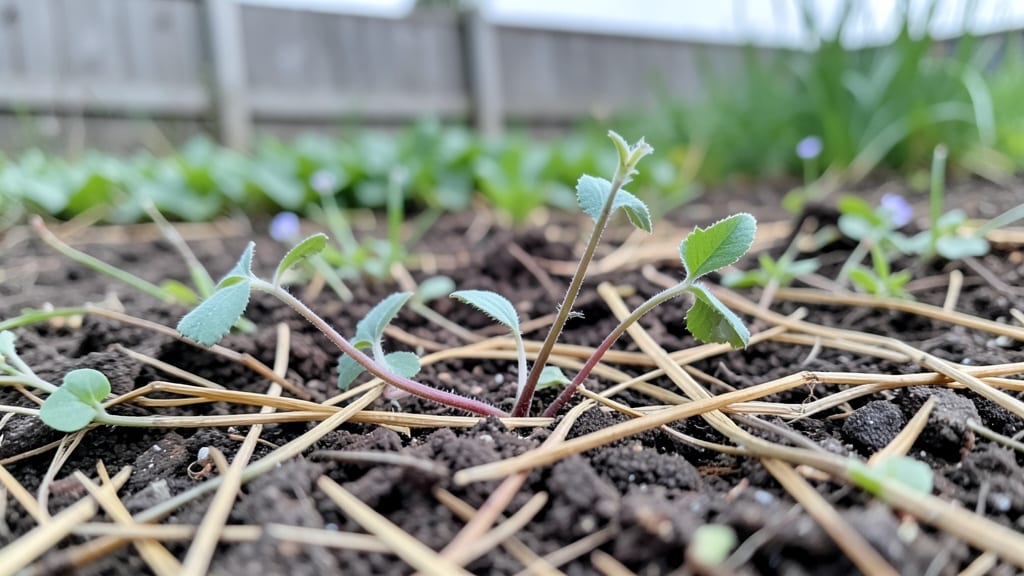
Identifying black bindweed seedlings early is key—these tiny invaders show up as delicate heart-shaped leaves with pointed tips, growing rapidly in tight clusters along garden edges. Act fast by yanking them before their vines thicken or roots take hold, or smother them with thick mulch to stop regrowth.
Black bindweed seedlings are masters of disguise, mimicking harmless plants until they've established deep roots. 🌱 Their rapid growth means what starts as a few leaves can become a tangled mat within weeks, choking out your flowers and vegetables.
I've seen gardeners waste hours trying to pull mature vines only to watch new sprouts pop up—prevention through early removal or mulching is your best defense against this persistent weed.
What makes this weed so tricky is its ability to spread through both seeds and underground tubers, making traditional removal methods like pulling ineffective long-term. Solarization or landscape fabric can break its cycle, but consistency is key—one missed seedling can restart the whole process.
💡 In This Article
- Identifying Black Bindweed Seedlings vs. Other Weeds
- Effective Black Bindweed Removal Methods for Gardens
Identifying black bindweed seedlings vs. other weeds
Black bindweed seedlings often get confused with morning glory or creeping jenny because their early leaves resemble these plants. However, the key difference lies in the leaf attachment and stem texture.
Black bindweed seedlings have heart-shaped leaves with pointed tips that grow in a clockwise spiral along the stem, while morning glory leaves grow in a counterclockwise pattern. The stems also differ—black bindweed's are hairless and slightly waxy, whereas morning glory stems often have fine hairs.
Another critical visual clue is how the seedlings emerge. Black bindweed sprouts in tight clusters along garden edges, paths, or disturbed soil, often within 1-2 inches of the ground. Morning glory seedlings, by contrast, appear more randomly and tend to have a slightly broader leaf base.
The rapid growth rate—up to 6 inches per day—is another red flag, as this weed can quickly overtake other plants if left unchecked. 🌱
Why does early identification matter? Black bindweed develops thick, woody roots that can grow 10-15 feet deep and spread horizontally up to 30 feet in a single season. These roots produce new shoots, making manual removal nearly impossible once established.
Unlike creeping jenny, which stays low to the ground, black bindweed's vines climb aggressively, smothering plants and blocking sunlight.
Here’s a quick comparison to help you spot the difference:
- Leaf Shape: Black bindweed leaves are heart-shaped with pointed tips (like an arrowhead), while creeping jenny leaves are more rounded with a slightly scalloped edge.
- Growth Pattern: Black bindweed grows in clockwise spirals; morning glory grows in counterclockwise spirals.
- Stem Texture: Black bindweed stems are smooth and waxy; morning glory stems often have fine hairs.
- Spread Speed: Black bindweed can spread 30 feet per year via underground roots, while creeping jenny spreads slowly via shallow runners.
The science behind this invasiveness is fascinating. Black bindweed produces two types of roots: shallow fibrous roots for quick nutrient absorption and deep, thick tubers for survival. These tubers can remain dormant for years, waiting for the right conditions to sprout.
This is why a single missed seedling can lead to a full-blown infestation within 2-3 seasons. 💫
If you’re still unsure, check the leaf veins—black bindweed leaves have prominent veins that curve toward the leaf tip, while creeping jenny’s veins are more parallel.
Grab a magnifying glass and examine the stem at the soil line: black bindweed’s stems often have a slightly purple tint when young, which fades as the plant matures. This subtle detail can be your best friend in catching it early!