
Planting
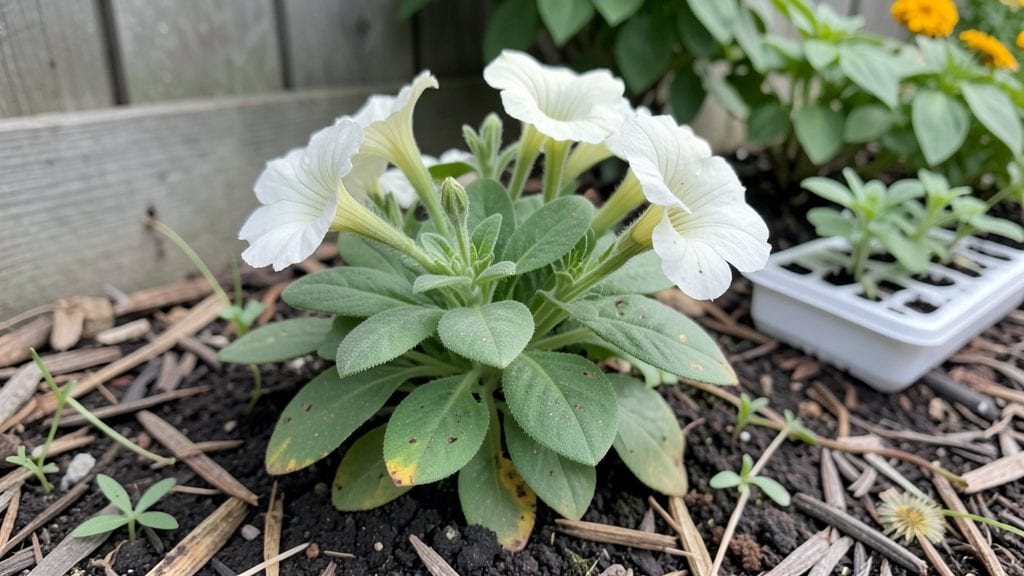
Growing white petunia seeds from scratch gives you clouds of fragrant blooms that transform any garden bed into a dreamy, high-contrast showstopper. 🌿 I’ve started them every spring for years, and the secret isn’t fancy equipment—it’s timing, warmth, and patience.
These delicate seeds need coaxing, but once they take hold, they repay you with weeks of effortless beauty.
The first 8 weeks are critical: you’ll start indoors under lights or in a sunny window, then harden off seedlings before transplanting after frost. Too much heat or uneven moisture, and you’ll get leggy, weak plants—but get it right, and you’ll have vibrant white cascades by early summer.
Even beginners can nail this with the right setup and a little attention to detail.
📚 In This Guide
- What you need
- Instructions
- Tips and common mistakes
- Wrapping up and next steps
What you need
- ● White petunia seeds: 1 packet (typically contains 200-500 seeds, depending on the brand). Look for varieties like 'White Cascade' or 'White Velvet' for stunning blooms!
- ● Seed-starting trays or small pots: 2-4 (2-3 inch pots work well for individual seedlings). Ensure they have drainage holes!
- ● Seed-starting mix: 1-2 bags (sterile, well-draining mix like pro-mix or coco coir). Avoid garden soil—it can harbor diseases.
- ● Plastic wrap or clear lid: 1 (to create a mini greenhouse and retain moisture).
- ● Spray bottle: 1 (for gentle watering to avoid disturbing seeds).
- ● Grow lights or sunny windowsill: 1 (a full-spectrum LED grow light is ideal for 12-16 hours/day, or place trays in a south-facing window).
- ● Fertilizer: 1 (balanced, water-soluble fertilizer like 10-10-10 or a fish emulsion for seedlings). Dilute to half-strength!
- ● Transplanting tools: Small hand trowel
- ● Potting soil (for transplanting)
- ○ Gloves (optional, but helpful for handling soil)
- ● Heating mat: 1 (keeps soil warm for faster germination, especially in cooler climates).
- ● Humidity dome: 1 (alternative to plastic wrap for controlled humidity).
- ● pH testing kit: 1 (to ensure soil pH is between 6.0-7.0, ideal for petunias).
- ● Plant labels: 10-20 (to track varieties and planting dates).
- ● Insecticidal soap: 1 bottle (prevents pests like aphids or spider mites).
- ● Mulch: 1 bag (like straw or shredded leaves to retain moisture after transplanting).
How to grow white petunias from seed to show-stopping blooms
Petunias reward patience with nonstop color—here's how to coax those velvety white blooms from tiny seeds.
🌱 Step 1: Prepare Containers and Seed Starting Mix
Fill your 4-cell seed trays with 2 cups of seed-starting mix per tray, pressing it down lightly to remove air pockets. Petunia seeds are tiny—about the size of a pinhead—so I use a toothpick to create ¼-inch-deep furrows in each cell. This prevents burying them too deep, which delays germination.
Moisten the mix until it feels like a damp sponge—squeeze it gently and it should hold together without dripping. I like to water from the bottom by placing the tray in ½ inch of warm water for 10 minutes, then letting it drain. This keeps the surface perfectly moist without disturbing the soil.
🌱 Step 2: Sow Seeds and Create Optimal Germination Conditions
Using a clean pencil eraser, gently press 3-4 seeds into each furrow, spacing them ¼ inch apart. Cover them with a thin layer of vermiculite—just enough to barely see the seeds through it. Petunia seeds need light to germinate, so don't bury them. Label each tray with the variety and date—white petunias like 'White Cascade' or 'White Dream' take 7-10 days to sprout.
Place the tray in a humidity dome or cover it with clear plastic wrap to trap warmth. Keep it in a spot that stays at 70-75°F—a seedling heat mat helps if your home runs cooler. Check daily for condensation on the dome; if it's foggy, lift it for 10 minutes to prevent fungal growth. You'll see the first tiny green shoots in about a week.
☀️ Step 3: Provide Light and Thin Seedlings for Strong Growth
Once 50% of seeds have sprouted, remove the dome immediately—petunia seedlings rot quickly in trapped humidity. Move them under grow lights positioned 2-3 inches above the trays, providing 14-16 hours of light daily. Without enough light, seedlings stretch toward the window, becoming weak and leggy. You'll know they're getting proper light when they develop dark green, sturdy leaves spaced ½ inch apart.
When seedlings have 2-3 true leaves (not the first tiny cotyledons), thin them to the strongest plant per cell. Use clean scissors to snip the extras at soil level—pulling risks disturbing the roots of remaining plants. Water gently from below after thinning to avoid washing away the delicate soil.
🪴 Step 4: Harden Off and Transplant to Larger Pots
After 4 weeks, when seedlings have 4-5 sets of true leaves, it's time to transplant. Fill 4-inch pots with 2 cups of potting mix per pot, making a hole in the center with your finger. Gently remove a seedling by grasping it at the soil level, not the stem, and place it in the new pot. Fill around the roots with more mix, pressing lightly to eliminate air pockets.
Water thoroughly until it drains from the bottom, then place the pots in a shaded outdoor spot for 3-4 days to acclimate. Gradually increase sun exposure over 7-10 days, moving them to morning sun only first, then to full sun by day 7. This prevents leaf scorch—a common mistake that turns petunia leaves yellow and crispy.
✂️ Step 5: Fertilize and Prune for Continuous Blooms
Two weeks after transplanting, begin fertilizing with ½-strength liquid fertilizer every 10-14 days. Petunias are heavy feeders, but too much fertilizer burns roots—always dilute it as directed. Deadhead spent blooms by pinching off the flower stem just above the next set of leaves. This encourages the plant to produce more buds instead of going to seed.
If your petunias start looking leggy or sparse, pinch back the top growth by ⅓ to promote bushier growth. You'll see new side shoots emerge within 10-14 days, leading to a fuller, more vibrant plant. With consistent care, your white petunias will bloom nonstop from early summer until frost—worth every step!
Tips & tricks for perfect white petunia blooms
These game-changing strategies will help you transform those tiny white petunia seeds into a summer-long floral masterpiece—without the common pitfalls that derail most gardeners.
Seed Starting Mix Secret: In Step 1, when preparing your 2 cups of seed-starting mix per tray, I recommend adding a handful of perlite to improve drainage. Petunia seeds rot quickly in soggy conditions, and this small adjustment prevents the dreaded "damping off" that kills seedlings before they even sprout. The mix should feel like a damp sponge—not dripping wet.
Germination Temperature Tip: Maintaining that 70-75°F range in Step 2 is crucial, but don't panic if your home runs cooler. Place your humidity dome on a seedling heat mat set to 75°F for the first 7-10 days—this creates the perfect environment for those tiny white petunia seeds to germinate reliably. I've seen germination rates jump from 50% to nearly 90% with this simple addition.
Lighting Technique: The 14-16 hours of light in Step 3 is non-negotiable for preventing leggy seedlings. If you're using natural light, position your trays on an east-facing windowsill first, then rotate to south-facing as the sun strengthens. For grow lights, keep them just 2-3 inches above the seedlings—the closer they are, the more intense the light, but be careful not to burn the delicate leaves.
Transplanting Hack: When you're ready to transplant after 4 weeks in Step 4, water your 4-inch pots thoroughly before removing seedlings from their trays. This creates a "root ball" that's easier to handle and reduces transplant shock. Gently squeeze the pot sides to loosen the root ball before sliding the seedling out—this prevents root damage that can set back your petunias by weeks.
Pro Tips for White Petunia Seeds
- These game-changing strategies will help you transform those tiny white petunia seeds into a summer-long floral masterpiece—without the common pitfalls that derail most gardeners.
- Seed Starting Mix Secret: In Step 1, when preparing your 2 cups of seed-starting mix per tray, I recommend adding a handful of perlite to improve drainage.
- Germination Temperature Tip: Maintaining that 70-75°F range in Step 2 is crucial, but don't panic if your home runs cooler.
Frequently asked questions
Got questions about growing white petunia seeds?
You’re in the right place! Here are answers to the most common queries—from planting to troubleshooting—so you can enjoy those dreamy blooms in no time.
How long does it take for white petunia seeds to germinate?
White petunia seeds typically germinate in 7–21 days after sowing, depending on temperature and moisture. Keep the soil consistently warm (around 70°F) and humid (use a humidity dome or plastic wrap) to speed up the process. Patience is key—some seeds may take longer!
Can I plant white petunia seeds directly in the garden, or should I start indoors?
For best results, start seeds indoors 8–10 weeks before the last frost in your area. Petunias are sensitive to cold, and direct sowing outdoors often leads to slower growth or poor germination. Use seed trays with a heating mat for faster sprouting, then transplant seedlings once temperatures stay above 50°F.
Why aren’t my white petunia seeds sprouting? Troubleshooting tips?
If your seeds aren’t germinating, check these common issues:
- Temperature: Too cold? Use a heat mat or move to a warmer spot.
- Moisture: Soil too dry? Keep it damp (not soggy) with a spray bottle.
- Light: Seeds need light to germinate—place trays near a sunny window or under grow lights.
- Freshness: Old seeds (over 1 year) may have low viability—test with a fresh packet.
Still no luck? Try pressing seeds lightly into the soil (they need light but not deep burial).
What’s the best companion plant for white petunias?
White petunias pair beautifully with salvias, marigolds, or snapdragons—they complement colors while repelling pests like aphids. Avoid planting near mint or fennel, as their strong roots can compete with petunias. For containers, mix with basil or nasturtiums for a fragrant, pest-resistant combo!
How do I overwinter white petunia seeds for next year?
Petunias are annuals, so they don’t survive winter—but you can save seeds from spent blooms! Let a few flowers fade naturally, then collect the dried seed pods. Store them in a cool, dry place (like a paper envelope in the fridge) for up to 1 year. Pro tip: Label them to avoid mix-ups!
Wrapping up and next steps
Growing white petunia seeds is a rewarding journey that transforms your garden into a fragrant, dreamy paradise in just 8 weeks! 🌸 With the right soil, sunlight, and care, you’ll enjoy vibrant blooms that brighten up any space—whether it’s a cozy balcony, a sprawling backyard, or even a sunny windowsill.
Don’t let hesitation hold you back; these delicate yet resilient flowers are perfect for beginners and seasoned gardeners alike.
Ready to dive in? Start by gathering your supplies today—order those white petunia seeds and prepare your planting area. Every seed is a promise of beauty waiting to unfold! Happy planting! 🌱