
Planting
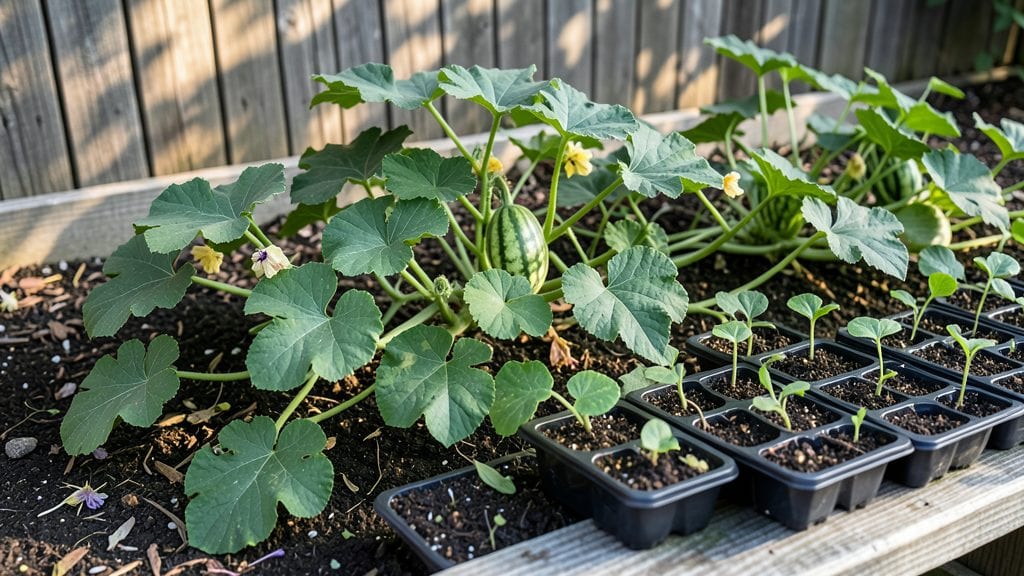
Precision watermelon seed spacing turns scrappy vines into fruit-loaded monsters—the difference between 10-pound melons and sad, stunted ones. I learned the hard way when my first crop produced only two decent melons because I crammed seeds too close together.
The right spacing gives roots room to spread, vines to stretch without competing, and fruit to grow heavy without snapping stems.
Start with soil that drains like sand—watermelons hate soggy feet—and warm it to at least 70°F before planting. Space seeds 1 inch deep, then thin seedlings to 2 feet apart in rows that sit 6 feet apart.
This might seem generous, but crowded plants fight for sunlight, water, and nutrients, leaving you with bitter fruit and weak vines. Think of it like giving each plant its own personal sunbathing spot.
Once established, vines will sprawl 10-15 feet, so plan trellises or let them trail if space is tight. Water deeply once a week (2-3 inches total) and watch for powdery mildew—a sign your plants are stressed from overcrowding.
Proper spacing also means fewer pests and better air circulation, so diseases stay away. By midsummer, you’ll have vines thick as your arm and melons so heavy they’ll need a basket to carry them.
This method works for both bush and vining varieties, though bush types (like Sugar Baby) tolerate tighter spacing—18 inches apart. The key is patience: watermelons need 70-90 days to mature, and rushing the spacing won’t speed up the process.
Trust me, the extra room now means bigger, sweeter harvests later—no sad, undersized melons allowed.
📚 In This Guide
- What you need
- Instructions
- Tips and common mistakes
- Wrapping up and next steps
What you need
- ● Watermelon seeds: Choose disease-resistant varieties (e.g., 'Sugar Baby' or 'Crimson Sweet'). Aim for 3-5 seeds per hill if direct-sowing, or 1-2 seeds per cell for transplants.
- ● Garden soil: Well-draining, fertile loam (pH 6.0–6.8). Amend with 2–3 inches of compost or aged manure per planting area.
- ○ Planting containers (optional for transplants): Biodegradable pots (3–4 inches deep) or seed-starting trays if sowing indoors.
- ● Measuring tape or ruler: For precise 24–36-inch spacing between hills and 6–12-inch spacing within hills.
- ○ Garden twine or stakes: To mark rows (optional but helpful for large plots).
- ● Watering can or hose with a gentle nozzle: Avoid disturbing seeds—aim for 1 inch of water per week.
- ● Mulch (straw or black plastic): To retain moisture and suppress weeds. Apply after seedlings emerge.
- ● Fertilizer (balanced 10-10-10 or compost tea): Lightly incorporate at planting time (1 tbsp per hill).
- ● Seedling heat mat: If starting indoors in cool climates (70–85°F ideal for germination).
- ● Row covers: Frost protection for early seedlings (remove when true leaves appear).
- ● Drip irrigation kit: For consistent moisture without overwatering.
- ● Garden journal: Track seed varieties, spacing, and harvest dates for future reference!
Precision planting for optimal watermelon seed spacing
Here’s how to space watermelon seeds for maximum vine spread and fruit production—critical for avoiding overcrowding and poor yields.
Understand Your Variety’s Space Needs
Watermelon vines sprawl aggressively, so spacing depends on the type. Small-fruited varieties like ‘Sugar Baby’ need 4 feet between plants, while larger varieties like ‘Crimson Sweet’ require 6 feet. Check your seed packet for exact spacing—this determines how many plants you can fit in a row or hill.
If growing in hills (mounds of soil), space plants 3-4 feet apart within the hill and 6 feet between hills. This creates airflow and reduces disease risk. I always sketch a quick grid on paper first to visualize plant placement before digging.
Prepare the Soil and Mark Planting Spots
Watermelons thrive in warm, well-drained soil with a pH of 6.0-6.8. Work in 2-3 inches of compost or aged manure into the top 6 inches of soil before planting. This improves drainage and provides nutrients for sprawling vines.
Use a stake or dowel to mark each planting spot at the correct spacing. For rows, drive stakes every 4-6 feet along the row and measure out from there. This prevents guesswork and ensures even distribution. I like to use bright-colored flags for visibility in the garden.
Plant Seeds at the Right Depth and Depth
Sow 2-3 seeds per hole at a depth of 1 inch, since germination rates can be inconsistent. Once seedlings emerge, thin to the strongest plant per spot. Planting too deep delays germination, while shallow planting risks drying out the seed.
Keep soil consistently moist until germination, which typically takes 7-10 days in 70-85°F soil. Use a soaker hose to water gently—avoid disturbing the seeds. If planting in hills, mound soil into 6-inch-high pyramids to improve drainage and warmth.
Train Vines for Efficient Space Use
As vines grow, guide them along trellises or rows to prevent sprawling. For bush varieties, prune side shoots to encourage upward growth, while sprawling types benefit from string trellises to lift fruit off the ground. This not only saves space but also reduces disease from soil-borne pathogens.
Watch for first true leaves—this signals it’s time to thin seedlings to one per spot. Remove weaker plants at the base with clean shears to avoid damaging roots. Mulch around plants with straw or black plastic to retain moisture and suppress weeds, which compete for nutrients.
Monitor and Adjust for Optimal Growth
Watermelons need full sun (6-8 hours daily) and consistent moisture, especially during flowering. Water at the base to avoid wetting leaves, which can spread disease. You’ll know spacing is working when vines fill their allotted space without overlapping.
If vines start crowding before fruiting, prune back excess growth to redirect energy to fruit production. Harvest when tendrils near the fruit turn brown and the watermelon sounds hollow when tapped—a sure sign of ripeness.
Tips & tricks for precision watermelon planting
Getting watermelon spacing right transforms a good harvest into an exceptional one—here’s how to maximize your garden’s potential without common pitfalls.
Variety-Specific Spacing: The 4-foot spacing for small varieties like ‘Sugar Baby’ and 6-foot spacing for larger types like ‘Crimson Sweet’ isn’t arbitrary—it accounts for vine spread and fruit size. I’ve seen gardeners cram plants too close, leading to stunted growth and poor fruit development. Always verify your seed packet’s recommendations, as some heirloom varieties need even more room.
Visual Planning Pays Off: Before digging, sketch a simple grid on paper showing your row layout with the exact spacing measurements. This prevents the common mistake of uneven spacing that creates weak spots in your planting scheme. For hills, imagine each mound as a cluster—3-4 feet apart within the hill, with 6 feet between clusters. This airflow strategy reduces fungal diseases that thrive in crowded conditions.
Soil Temperature Matters: Watermelon seeds need soil temperatures between 70-85°F to germinate properly. If your soil is cooler than 70°F, consider using black plastic mulch to warm it up before planting. I’ve learned this the hard way—seeds planted in cold soil either rot or take weeks to sprout, delaying the entire growing season.
Thinning Technique: When thinning to one strong seedling per spot, use clean shears to avoid damaging roots of remaining plants. The first true leaves signal readiness for thinning—this is when the plant has enough energy to recover. I’ve seen gardeners pull seedlings by hand, which can uproot nearby plants or leave stubs that rot.
Pro Tips for Watermelon Seed Spacing
- Getting watermelon spacing right transforms a good harvest into an exceptional one—here’s how to maximize your garden’s potential without common pitfalls.
- Variety-Specific Spacing: The 4-foot spacing for small varieties like ‘Sugar Baby’ and 6-foot spacing for larger types like ‘Crimson Sweet’ isn’t arbitrary—it accounts for vine spread and fruit size.
- Visual Planning Pays Off: Before digging, sketch a simple grid on paper showing your row layout with the exact spacing measurements.
Frequently asked questions
Got questions about watermelon seed spacing?
You’re not alone! Here are answers to the most common queries—so you can plant with confidence and reap those juicy rewards.
How close can I plant watermelon seeds?
Watermelons need space to spread! Plant seeds 1 to 2 inches deep, spacing them 6 to 12 inches apart in rows. For vining varieties, leave 3 to 6 feet between rows to avoid overcrowding. Bush varieties can tolerate slightly closer spacing (2–3 feet apart).
When is the best time to space seeds for optimal growth?
Wait until soil temperatures reach 70°F+ (use a soil thermometer) before planting. In cooler climates, start seeds indoors 2–3 weeks before the last frost, then transplant with proper spacing. Early planting risks poor germination—patience pays off for bigger melons!
Can I plant watermelon seeds too far apart?
Yes, but it may reduce yields. While overcrowding stresses plants, spacing seeds 18+ inches apart can lead to fewer fruits. Aim for the 6–12 inch range—this balances airflow, sunlight, and root growth. If you’ve already planted sparsely, thin seedlings to the recommended distance.
What if I don’t have enough space for proper spacing?
Try these space-saving tricks:
- Vertical trellises: Train vining varieties upward (saves 50%+ space).
- Bush varieties: Choose compact hybrids like ‘Sugar Baby’ (matures faster, needs less room).
- Container gardening: Use large pots (15+ gallons) with 1–2 plants per container.
My watermelon seedlings look weak after thinning. Is this normal?
It’s heartbreaking, but yes, it’s normal! Thinning removes competition, so remaining plants redirect energy to roots and fruit. To ease the transition:
- Water deeply after thinning to reduce shock.
- Fertilize lightly with compost or a balanced 10-10-10 mix.
- Mulch around plants to retain moisture.
Wrapping up and next steps
Perfecting your watermelon seed spacing is the secret to a thriving garden and a bountiful harvest! By following the right techniques—whether you’re planting in rows, hills, or containers—you’ll give your vines the room they need to flourish. Don’t let small details hold you back; every inch counts!
Ready to put your newfound knowledge into action? Grab your gloves, mark those rows, and get planting! With patience and precision, you’ll soon be enjoying sweet, juicy watermelons that’ll make your neighbors green with envy. Happy gardening! 🌱🍉