Vegetables
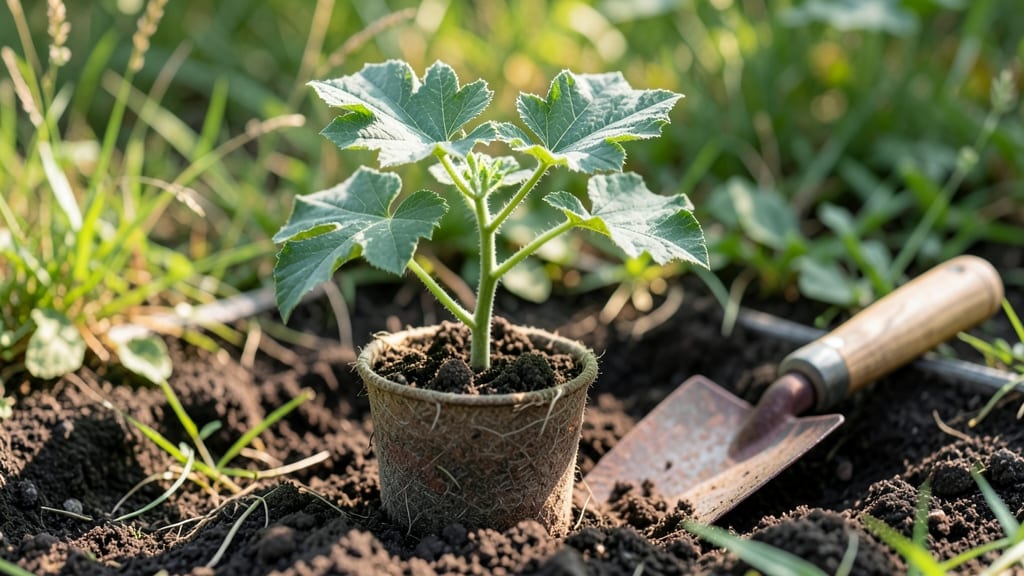
Mastering cucumber seedling identification early keeps those tiny sprout mistakes from turning into a garden headache—because those first leaves hold the secret. ✨ The moment your seeds sprout, you’ll see tiny round cotyledons (the first leaves) that look like two perfect little buttons.
True cucumber leaves arrive next, jagged-edged and lobed like a maple leaf’s simpler cousin, while weeds often have smooth or serrated edges that don’t match this pattern.
Stem color is your secret weapon: healthy cucumber seedlings sport a bright green stem with a slight waxy sheen, while stressed or diseased plants turn dull or yellowish. Check the leaf undersides too—hairy stems or fuzzy leaves usually mean you’ve got a volunteer squash or melon instead of a cucumber.
I’ve pulled out enough "cucumbers" that were actually bitter melon seedlings to know this step is non-negotiable.
By the time your seedlings hit 2-3 true leaves, you’ll be able to match them to your seed packet varieties with 90% accuracy. Bush types stay compact with smaller leaves, while vining varieties send out longer, more delicate stems early on.
The key is acting fast—once those leaves get bigger than your thumbnail, identification gets trickier.
Here’s the good news: even if you mix up a few, cucumbers are forgiving. Thin them to 12 inches apart once you’re sure, and focus on keeping the soil moist but not soggy. The right spacing now means fewer diseases and more productive plants later—no guesswork required.
Root Causes Behind Misidentifying Seedlings
Accurately identifying cucumber seedlings can be tricky, especially when they look suspiciously similar at first glance. Several key factors—often overlooked—can lead to confusion between varieties. Understanding these causes helps gardeners make informed decisions and avoid costly mistakes. Let’s break down the science and practical reasons why seedlings might be misidentified.
Cucumbers, like many plants, exhibit juvenile traits that differ from their mature characteristics. Seedlings may display leaf shapes, stem colors, or growth patterns that don’t align with the adult plant’s expected traits. For example:
- Leaf shape: Some heirloom varieties (e.g., Lemon Cucumber) start with deeply lobed or serrated leaves but develop smoother, rounded leaves as they mature. A seedling with jagged edges might be mistaken for a different variety if only early-stage leaves are observed.
- Stem color: Pigment production (like anthocyanins, which create red or purple hues) often intensifies with sunlight exposure. A pale green stem in shade could darken significantly once transplanted, misleading identification.
- Hybrid confusion: F1 hybrid seedlings (e.g., Straight Eight) may not show dominant traits until later stages. If a seedling lacks the expected striped pattern or compact growth, it might be dismissed as a misidentification—when it’s actually just waiting its turn.
Actionable tip: 💡 Wait until the plant produces true leaves (the 3rd–5th leaf set) before making judgments. Use a seedling ID chart that includes both juvenile and mature traits for cross-reference.
Seedlings are highly sensitive to their growing conditions, and stress can alter their appearance in ways that mimic different varieties. Common environmental culprits include:
| Factor | Effect on Seedlings | Misidentification Risk |
|---|---|---|
| 🌞 Light intensity | Low light causes etiolation—elongated, pale stems and smaller leaves. | Might resemble a different variety with weaker growth (e.g., Bush Champion vs. Marketmore). |
| 💧 Over/under-watering | Wilting or yellowing leaves (chlorosis) can distort leaf shape and color. | Seedlings may look like disease-stricken varieties (e.g., Powdery Mildew-resistant types when they’re not). |
| 🌡️ Temperature swings | Cold stress (<60°F) slows growth, while heat (>90°F) can cause bleaching or stunted development. | Heat-stressed seedlings might be mistaken for slow-maturing varieties like Armenian cucumbers. |
Actionable tip: ✨ Maintain consistent conditions (65–75°F, 6+ hours of light) in seedling trays. Use grow lights if natural light is insufficient to prevent false traits.
If you’re growing multiple cucumber varieties—or even other cucurbits like squash or melons—cross-pollination can create seedlings that don’t match their parent plants. Here’s how it happens:
- Wind/pollinator transfer: Bees or wind can carry pollen between different cucumber species (e.g., Cucumis sativus and Cucumis anguria, the West Indian gherkin). Result? Seedlings with hybridized traits like mixed leaf textures or growth habits.
- Shared soil/pathogens: Fungal spores (e.g., Fusarium) or bacterial wilt can alter seedling vigor, making them appear stunted or deformed—often mistaken for a different variety entirely.
- Seed mix-ups: Accidentally planting wild cucumber seeds (e.g., Echinocystis lobata) alongside domesticated ones can lead to seedlings with spiny stems or odd leaf patterns.
Actionable tip: 🎯 Isolate varieties by 10+ feet or use row covers to prevent cross-pollination. Sterilize tools and soil between plantings to avoid contamination.
The most straightforward (but frustrating) reason for misidentification? Human error. Issues here include:
- Incorrect seed packaging: Some seed sellers reuse labels or mix varieties in bulk. A bag labeled “Straight Eight” might actually contain “Poona Kheera” seeds.
- Heirloom vs. hybrid confusion: Heirloom seeds (e.g., Diva) can revert to wild-type traits if not properly selected, while hybrids (e.g., Sweet Success) may not breed true.
- Saved seeds from unknown parents: If you harvest seeds from a mixed garden, the next generation’s seedlings could be a genetic lottery.
Actionable tip: 🔥 Purchase seeds from reputable suppliers (e.g., Baker Creek, Johnny’s Selected Seeds) and photograph seedlings alongside their seed packet for verification.
Quick Fixes for Common Seedling Struggles
Now that you’ve identified your cucumber seedlings, you might be dealing with issues like slow growth, discoloration, or odd shapes. Don’t worry—most problems have simple, actionable solutions. Below, we’ve mapped common causes to practical fixes, plus prevention tips to keep your seedlings thriving.
Cause: Overwatering, underwatering, or nutrient deficiency (often nitrogen or magnesium).
How to Fix It: ✅ Check soil moisture – Stick your finger 1 inch deep. If damp, hold off on watering. If dry, give a light drink (avoid soggy soil). ✅ Adjust watering habits – Water at the base (not leaves) in the morning to prevent fungal issues. ✅ Fertilize gently – Use a balanced liquid fertilizer (10-10-10) or compost tea to boost nutrients. Avoid overdoing it—too much salt can burn roots.
Prevention Tips: 💡 Use well-draining soil (mix in perlite or coconut coir). 💡 Mulch around seedlings to retain moisture without waterlogging.
Cause: Lack of light, overcrowding, or inconsistent germination timing.
How to Fix It: 🔥 Move to brighter light – Place under grow lights (12-16 hours/day) or in a sunny south-facing window. 🍳 Thin seedlings – If crowded, snip weaker stems at soil level (leave the strongest one per pot). 👨🍳 Hardening off – Gradually expose seedlings to outdoor conditions (start with 1-2 hours/day).
Prevention Tips: ✨ Start with proper spacing – Sow seeds 1 inch apart, then thin to 2-3 inches. ✨ Use reflective surfaces (like aluminum foil) under trays to maximize light.
Cause: Aphids, spider mites, powdery mildew, or bacterial leaf spot.
How to Fix It: 🔪 Spot-treat pests –
- Aphids: Spray with soapy water (1 tsp mild soap per quart of water).
- Mites: Blast off with a strong water stream or use neem oil spray.
🥘 Prevent fungal spread –
- Remove infected leaves immediately.
- Apply baking soda spray (1 tsp baking soda + 1 quart water + drop of soap) weekly.
Prevention Tips: 🌡️ Improve airflow – Space plants 12+ inches apart. 🎯 Rotate crops – Avoid planting cucumbers in the same spot yearly.
Cause: Old seeds, incorrect soil temp, or poor moisture retention.
How to Fix It: ⏰ Test seed viability – Soak seeds in water for 24 hours; sinkers are good, floaters may be dead. ⏰ Warm up the soil – Use a seedling heat mat (70-85°F ideal) or place trays on a sunny windowsill. ⏰ Re-moisten soil – If dry, lightly mist and cover with plastic wrap until sprouts appear.
Prevention Tips: 💡 Store seeds properly – Keep in a cool, dry place (not the fridge). 💡 Use seedling heat mats for faster, more reliable germination.
Final Pro Tip: 🌱 Monitor daily – Cucumber seedlings grow fast! Check for pests, water needs, and light exposure every 2-3 days.
With these fixes, your seedlings should bounce back strong—ready for transplanting in 2-3 weeks! 🚀
Frequently asked questions about cucumber seedlings
How do I tell the difference between cucumber seedlings and weeds?
Look for jagged-edged leaves that resemble tiny maple leaves—this is a key cucumber trait. Weeds often have smooth, serrated, or rounded leaves. Also check the stem: healthy cucumber seedlings have a bright green, waxy stem, while weeds typically have hairy or fuzzy stems.
When will my cucumber seedlings develop true leaves?
True leaves (not the initial cotyledons) usually appear after 7-14 days of germination. These will be lobed and jagged, unlike the smooth, round cotyledons. Once you see these, you can start matching them to your seed packet varieties with confidence.
Can I identify cucumber varieties just from the seedlings?
Not with 100% accuracy—seedlings often look similar until they develop 3-5 true leaves. Bush varieties may show compact growth early, while vining types have longer stems. For best results, wait until flowering or fruiting to confirm the exact variety, especially for heirlooms.
What should I do if my cucumber seedlings look weak or discolored?
Check for yellowing leaves (possible nutrient deficiency) or pale stems (light stress). Move seedlings to a sunny spot with 6+ hours of light and use a balanced fertilizer (10-10-10). Avoid overwatering—keep soil lightly moist but never soggy.
How do I prevent cross-pollination between cucumber varieties?
Isolate varieties by at least 10 feet or use row covers to block bees. If space is limited, hand-pollinate with a small brush. Also, sterilize tools between plantings to avoid spreading pathogens that can alter seedling traits.