Plants
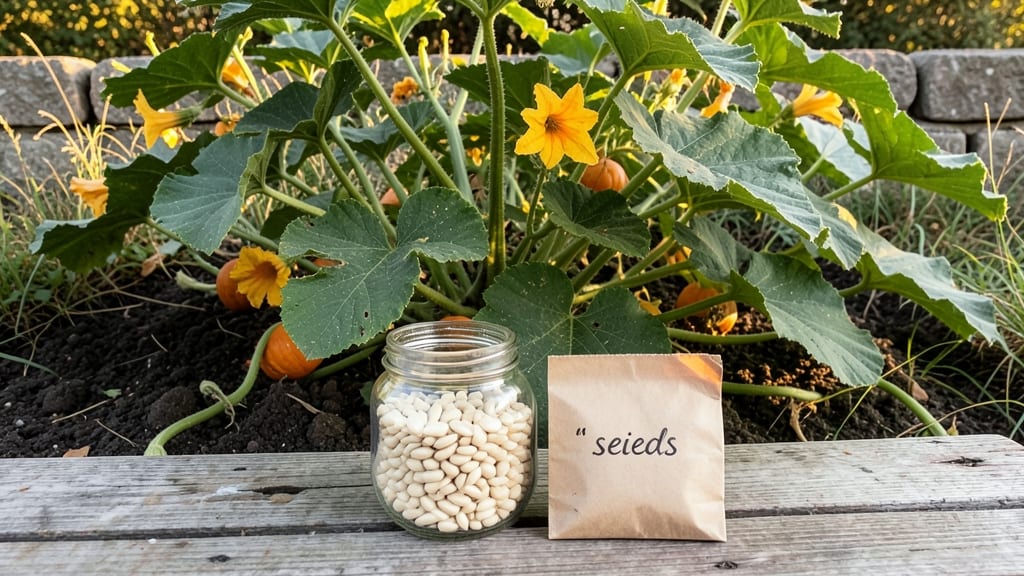
You can freeze pumpkin seeds to plant next year if you dry them thoroughly, store them in an airtight container with silica gel, and keep them at 0°F (-18°C) or below. Viability drops after 2-3 years, so test germination before planting by soaking seeds in warm water for 24 hours.
Freezing preserves pumpkin seeds by slowing down metabolic processes that degrade their quality over time. The key is removing all moisture first—even slight dampness can lead to mold or rotting in the freezer.
I’ve found that using a paper towel to dry seeds for 24-48 hours at room temperature works best, then sealing them in a vacuum-sealed bag or mylar pouch with silica gel packets.
This method keeps seeds viable for up to 3 years, though germination rates may drop below 80% after the second year. Always test a few seeds before planting to confirm their readiness!
💡 In This Article
- How Freezing Affects Pumpkin Seed Germination Rates
- Step-by-Step Guide to Storing Pumpkin Seeds for Planting
How freezing affects pumpkin seed germination rates
Freezing pumpkin seeds works because sub-zero temperatures slow down biological processes that degrade seed quality. The primary threats to viability are moisture content and oxygen exposure, both of which accelerate cellular damage.
When seeds freeze, any remaining water inside them forms ice crystals that can rupture cell membranes—this is why thorough drying (5-7% moisture) is critical. At 0°F (-18°C), enzymatic activity nearly halts, preserving the seed's internal structure for years. 🔥
The real science lies in lipid oxidation and enzyme degradation. Pumpkin seeds contain 20-30% oil, which oxidizes over time, creating free radicals that damage cellular components. Freezing slows this process dramatically, but not completely—after 3 years, oxidation can reduce germination rates by 30-50%.
Enzymes like lipase also break down fats, further compromising viability. The key is minimizing oxygen exposure by using airtight containers with desiccants like silica gel.
Short-term storage (1 year) maintains near-perfect germination rates (typically 95%+) when done correctly. However, beyond 2 years, rates drop to 70-85%, and after 3 years, they often fall below 50%.
This decline isn't just about temperature—it's the cumulative effect of slow oxidation and cellular aging. For example, a study on winter squash seeds showed a 15% annual viability loss in frozen storage, even under ideal conditions.
What most people don't realize is that freezing isn't perfect—it's a trade-off. While it preserves seeds better than room-temperature storage, it doesn't stop all degradation. The glass transition theory explains why: at freezing temps, seed components become glass-like, slowing molecular movement but not eliminating it entirely.
This is why testing germination before planting is essential. A simple paper towel test (soaking seeds for 24 hours) reveals which seeds are still viable.
Comparing short-term vs. long-term storage highlights the differences. After 1 year, seeds may look identical to fresh ones, but internal changes have already begun. After 3+ years, you might notice slight discoloration or a duller appearance—signs of lipid breakdown.
The aroma also fades, losing its fresh, nutty scent. These visual cues correlate with reduced germination potential, making regular viability checks non-negotiable for serious gardeners.
For best results, combine freezing with other preservation techniques. Store seeds in mylar bags with oxygen absorbers alongside silica gel for double protection. Monitor your freezer's temperature regularly—fluctuations above 10°F (-12°C) can accelerate degradation.
With these precautions, you can extend seed life by 1-2 years beyond standard frozen storage limits. 💫