
Transplanting
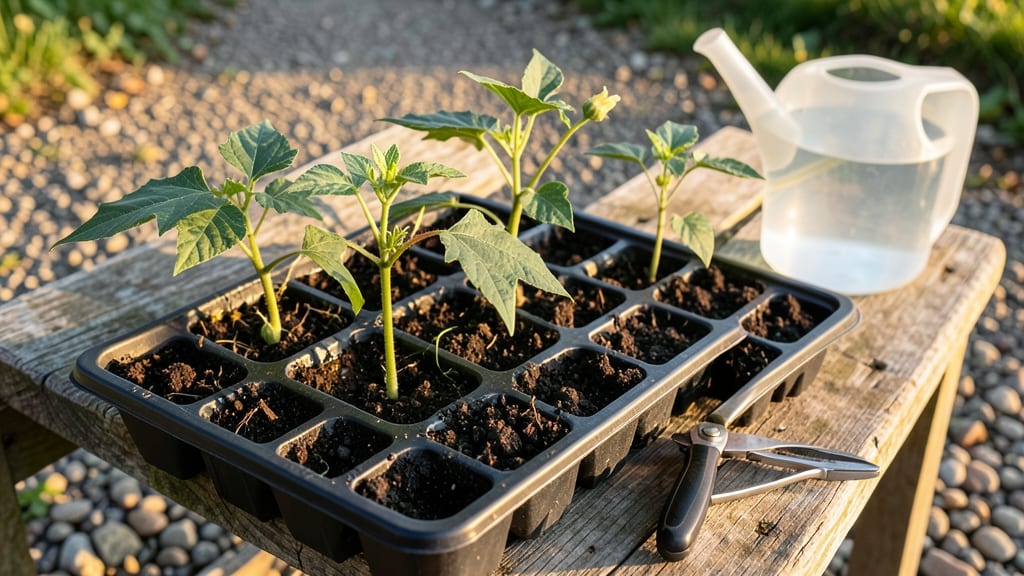
Fast germination for bitter gourd seedlings starts with the right warmth and moisture—think tropical greenhouse in a tray. I’ve battled weeks of waiting, but these tricks cut that time in half, giving you sturdy transplants ready for the garden.
The key? A heat mat, dampened seed paper, and patience that pays off with those first green hooks breaking through the soil.
You’ll need just three things: a seed-starting tray, a heat mat (or warm spot), and a spray bottle for gentle moisture. Bitter gourd seeds love warmth—75-85°F is their sweet spot—and they’ll sprout in 5-10 days if kept consistently damp but not soggy.
Overwatering is the silent killer here, so less is more until those first leaves appear.
Once they’ve sprouted, you’ll see velvety green leaves unfurling within days, signaling it’s time to thin to the strongest seedlings. Keep them in bright, indirect light until they’ve developed 2-3 true leaves, then they’re ready for their first transplant.
The payoff? Plants that grow faster and stronger than store-bought starts.
This method works for any warm-season crop, but bitter gourds demand extra care—especially in cooler climates. Start indoors 4-6 weeks before your last frost, and don’t rush the hardening process. Those first transplants might look fragile, but they’ll toughen up and reward you with prolific vines by summer.
📚 In This Guide
- What you need
- Instructions
- Tips and common mistakes
- Wrapping up and next steps
What you need
- ● Bitter gourd seeds – 10-20 seeds (fresh, organic seeds for best germination rates).
- ● Seed-starting trays or small pots – 2-4 inch diameter (6-8 trays/pots for 10-20 seeds).
- ● Seed-starting mix – 1-2 bags (lightweight, well-draining, and sterile).
- ● Grow lights or sunny windowsill – 12+ hours of light daily (LED grow lights work best).
- ● Spray bottle – For gentle watering (avoid over-saturating seeds).
- ○ Plastic wrap or humidity dome – To retain moisture (optional but helpful for germination).
- ● Small hand trowel – For planting seeds at the right depth (¼ inch).
- ● Labeling tags – To track seed varieties and planting dates.
- ○ Fertilizer (optional) – Balanced liquid fertilizer (5-5-5 NPK) for seedlings after sprouting.
- ○ Heat mat (optional) – Speeds up germination (70-80°F ideal for bitter gourd seeds).
- ● Transplanting tools – Small shovel or spoon for moving seedlings later.
Step-by-step instructions for growing bitter gourd seedlings
Here’s how to jumpstart your bitter gourd seedlings with speed and precision—no guesswork involved.
Prepare the Germination Medium
Start by filling a shallow tray or seedling flat with 2 inches of moistened seed-starting mix. The mix should feel like a wrung-out sponge—damp but not dripping. Bitter gourd seeds germinate fastest in warm, well-draining soil, so avoid compacted garden soil. I like to sprinkle a pinch of perlite into the mix for extra airflow, which prevents fungal issues that slow germination.
Spread the mix evenly and press down lightly with your fingers to eliminate air pockets. This ensures consistent moisture and prevents seeds from floating to the surface. A flat surface means seeds stay at the ideal ½-inch depth—too deep delays sprouting, while too shallow risks drying out.
Soak and Plant the Seeds
Place 4 bitter gourd seeds (one per cell if using a flat) into small indentations made with your finger. The seeds have a tough outer shell, so I soak them in lukewarm water for 12 hours before planting—this softens the shell and speeds up germination by 2-3 days. Drain the seeds well afterward to avoid waterlogged soil.
Cover the seeds with a thin layer of the same mix, just enough to obscure them. Press gently but don’t compact. Place the tray in a warm, dark spot (like a seedling heat mat set to 80-85°F) until sprouts appear. You’ll see tiny radicles (root tips) breaking through in 3-5 days—this is your signal to move to light.
Provide Warmth and Light for Fast Growth
Once sprouts emerge, transfer the tray to a bright, indirect light source (like a south-facing window or grow light). Bitter gourd seedlings need 12-14 hours of light daily to prevent leggy growth. I use a T5 fluorescent grow light kept 4 inches above the seedlings—closer than this can scorch tender leaves, while farther away encourages weak stems.
Keep the soil consistently moist but never soggy. Stick your finger ½ inch deep—if it feels dry, water lightly. Overwatering here causes damping-off, a fungal disease that turns seedlings mushy at the base. You’ll notice first true leaves (not the initial cotyledons) in 7-10 days—this is when you can thin to the strongest seedling per cell.
Harden Off for Outdoor Readiness
Two weeks before transplanting, begin hardening off by placing seedlings outside in partial shade for 2 hours daily. Gradually increase exposure to full sun over 7-10 days, ending with a full day outdoors. Bitter gourds are tropical and sensitive to cold—wait until nighttime temps stay above 60°F before moving them permanently.
Transplant in the late afternoon to reduce shock. Bury seedlings deeper than the cotyledons—this encourages root growth along the stem. Water deeply at the base to settle soil and reduce air pockets. Within 10-14 days, you’ll see vigorous new growth, signaling successful establishment.
Tips & tricks for perfect bitter gourd seedlings
The key to fast, thriving bitter gourd seedlings lies in precision at every stage—here’s how to optimize each step for maximum success.
Soaking Strategy: The 12-hour lukewarm water soak is non-negotiable for breaking bitter gourd seeds' tough outer shell. I place seeds in a small bowl with just enough water to cover them completely, then set it in a warm spot (like on top of the fridge) to maintain consistent 85°F warmth. After soaking, drain thoroughly but don't rinse—residual moisture helps kickstart germination while preventing waterlogging that can trigger fungal issues. This pre-treatment cuts germination time by nearly half, giving you sprouts in just 3-5 days instead of the usual 7-10.
Heat Management: Maintaining that 80-85°F range during germination is critical, but don't overlook the transition to light. Once radicles appear, move seedlings to bright indirect light immediately—delaying this step can cause seedlings to become etiolated (leggy and weak). I use a heat mat during germination and a T5 grow light during the light phase, keeping them 4 inches above the seedlings. The temperature drop from 85°F to room temperature (60°F minimum) signals the seedlings to focus on leaf development rather than just root growth, which is why you'll see those first true leaves appear in just 7-10 days.
Thinning Technique: When thinning to the strongest seedling per cell, I wait until those first true leaves appear—this ensures you're removing weaker seedlings before they've wasted energy developing. Use clean, sharp scissors to cut at soil level rather than pulling, which can disturb the remaining seedling's roots. The timing here is crucial: if you thin too early, you might remove a seedling that would have become dominant; if you wait too long, you risk overcrowding that stresses the remaining plants.
Harden-Off Hack: For the two-week hardening off period, I start with just 2 hours of partial shade and gradually increase exposure by 30 minutes each day. The key is to monitor seedlings closely—if you see wilting or yellowing, they're getting too much sun too soon. Bitter gourds are tropical plants, so they're particularly sensitive to temperature swings. Always harden off in the afternoon when temps are cooler, and never expose them to full sun until nighttime temps consistently stay above 60°F—this prevents shock that can stunt growth for weeks.
Pro Tips for Bitter Gourd Seedlings
- The key to fast, thriving bitter gourd seedlings lies in precision at every stage—here’s how to optimize each step for maximum success.
- Soaking Strategy: The 12-hour lukewarm water soak is non-negotiable for breaking bitter gourd seeds' tough outer shell.
- Heat Management: Maintaining that 80-85°F range during germination is critical, but don't overlook the transition to light.
Frequently asked questions
Got questions about nurturing bitter gourd seedlings? You’re not alone! Here are some of the most common concerns—and their solutions—to help you grow strong, healthy transplants with ease.
How long does it take for bitter gourd seeds to germinate?
Bitter gourd seeds typically germinate within 7–14 days when kept in warm (70–90°F), moist conditions. For faster results, soak seeds overnight before planting and maintain consistent soil moisture. Patience is key—if no sprouts appear after 2 weeks, check for rot or poor soil contact.
Can I transplant bitter gourd seedlings too early?
Yes, but avoid transplanting until seedlings have 2–3 true leaves and are at least 2–3 inches tall. Hardening off (acclimating to outdoor conditions) for 5–7 days beforehand reduces shock. Transplanting too early stresses plants, stunting growth. Wait until nighttime temps stay above 55°F for best results.
What’s the best alternative if my bitter gourd seeds won’t sprout?
If germination fails, try seedlings from a nursery or propagate from cuttings. Bitter gourd vines root easily in water—snip a healthy stem, remove lower leaves, and place in water until roots form (2–3 weeks). Alternatively, ask local gardeners for spare seedlings; bitter gourd thrives in tropical climates and is often shared!
Why are my bitter gourd seedlings turning yellow or wilting?
Yellowing leaves often signal overwatering, underwatering, or nutrient deficiency. Check soil moisture—bitter gourd prefers consistently moist but well-drained soil. Wilting may also indicate heat stress or pests (like aphids). Boost growth with a balanced fertilizer (10-10-10) and provide afternoon shade in hot climates.
Do bitter gourd seedlings need full sun to grow?
While bitter gourd loves 6–8 hours of direct sunlight daily, seedlings benefit from partial shade (30–50%) during their first 2 weeks post-transplant. Gradually increase sun exposure to avoid leaf scorch. In extreme heat (above 90°F), provide afternoon shade to prevent stress—your plants will thank you with vigorous growth!
Wrapping up and next steps
Growing bitter gourd seedlings into strong transplants is all about patience, the right conditions, and a little know-how! 🌱 With these fast-germination tips, you’re well on your way to a bountiful harvest—whether you’re a seasoned gardener or just starting out.
Remember, healthy seedlings mean healthier plants and a rewarding crop.
Ready to take the next step? Start small—plant a few seedlings in your garden or containers and monitor their progress. Once they’re thriving, expand your patch and enjoy the sweet (and slightly bitter!) rewards of your labor! 🌿