Pruning
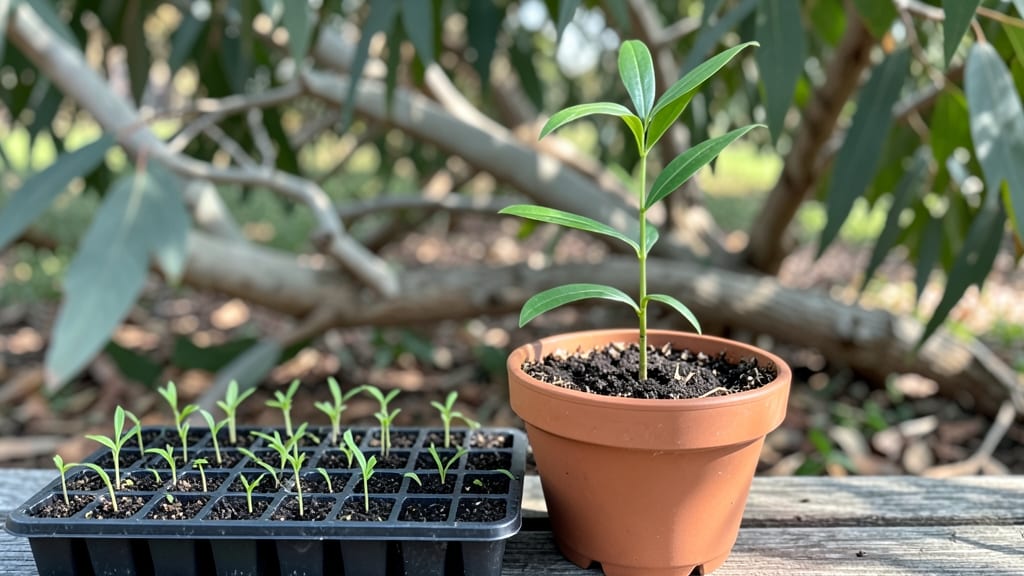
Growing eucalyptus from seed gives you a tree with silvery-blue foliage that smells like a summer breeze. 🌿 I started with a single seedling that now towers over my patio, and the key to its healthy growth was understanding the right pruning rhythm from the beginning.
The trick isn't just cutting branches—it's shaping the tree to grow strong, not just tall, so it stays lush year-round.
You'll need sharp pruning shears, a clean workspace, and a plan for when to cut—right after new growth appears in spring is ideal. Most people over-prune, thinking more cuts mean bushier growth, but eucalyptus responds best to light trims that encourage dense foliage.
Think of it like sculpting: remove dead wood first, then shape the canopy to let sunlight reach all the leaves.
By summer, you'll notice new shoots filling gaps where you pruned, and the fragrance becomes even stronger. The tree will develop that signature eucalyptus scent when you brush against its leaves, and the silvery-blue hues will brighten your outdoor space.
Pruning at the right time keeps it healthy and prevents weak, leggy growth that flops over in storms.
Works for both container-grown trees and those planted in the ground, though potted eucalyptus needs more frequent pruning to control size. If your seedling struggles to germinate, try soaking seeds overnight first—patience is key, but the payoff is worth it for that fresh, clean aroma on warm days.
📚 In This Guide
- What you need
- Instructions
- Tips and common mistakes
- Wrapping up and next steps
What you need
- ● Pruning shears: Bypass pruners (sharp, clean, and disinfected with rubbing alcohol to prevent disease). Recommended: Felco F-2 or similar.
- ● Loppers: For thicker branches (1–2 inches in diameter). Look for ratcheting loppers for ease.
- ● Pruning saw: For branches too thick for loppers (3+ inches). A curved-tooth pruning saw minimizes tear-out.
- ● Gloves: Heavy-duty gardening gloves (cut-resistant, like Mechanix Wear or Felco gloves).
- ● Disinfectant: 70% isopropyl alcohol or a pruning sealant (e.g., Tanglefoot Tree Wound Pruning Sealer).
- ● Trash bags or bucket: For collecting debris (1–2 large bags or a 5-gallon bucket).
- ● Safety gear: Safety glasses (to protect from debris) and earplugs (if using a chainsaw for large branches).
- ● Ladder or step stool: For reaching high branches (ensure it’s stable and rated for your weight).
- ○ String or measuring tape: To mark branches for removal (optional but helpful for structured pruning).
- ● Garden hose or spray bottle: For rinsing tools between cuts (keeps them clean and sharp!).
- ● Best time to prune: Late winter or early spring (before new growth starts). Avoid pruning during extreme heat or drought.
- ● Weather check: Choose a calm, dry day (no rain forecasted for 24 hours).
- ● Tree health: Prune only if the tree is healthy and disease-free. Skip if you spot signs of stress (yellowing leaves, oozing sap).
- ● Sunlight access: Ensure you have 6+ hours of sunlight for the area (eucalyptus loves light!).
Pruning guide for seeded eucalyptus trees: healthy growth tips
Here’s how to shape your eucalyptus into a thriving, year-round focal point—without stressing the tree.
✂️ Step 1: Time Your Pruning for Optimal Growth
Prune your eucalyptus in early spring, just as new growth begins. This timing lets the tree recover quickly before summer heat stress. Avoid pruning in late fall or winter—the tree is dormant, and fresh cuts won’t heal properly. I always check for fresh, bright green leaves as my cue that it’s safe to start.
If you must prune in summer, do it early in the morning when temperatures are cooler. This prevents shock from heat and sun exposure. Never prune during drought conditions—wait until the soil feels moist to the touch. Eucalyptus trees are tough, but they still need a little help to bounce back.
✂️ Step 2: Use the Right Tools for Clean Cuts
Grab your sharp, sterilized pruning shears or loppers—dull tools crush stems and invite disease. I dip my blades in rubbing alcohol between cuts to prevent spreading sap-borne infections. For thicker branches, use bypass pruners to make clean cuts without tearing the bark.
Cut just above a leaf node (where leaves meet the stem) at a 45-degree angle. This encourages new growth to sprout from the right spot. Avoid leaving stubs—eucalyptus heals poorly from jagged cuts. If you’re removing large branches, make the cut outside the branch collar (the swollen area where the branch meets the trunk).
✂️ Step 3: Shape for Airflow and Light Penetration
Remove dead, diseased, or crossing branches first—they’re the easiest to spot. Look for branches rubbing against each other or growing inward; these create weak points and block light. I thin out the center of the tree to let sunlight reach all the way to the trunk. This keeps the lower branches alive and prevents a bare, leggy look.
For a natural shape, prune to open the canopy—think of it like trimming a hedge but with more space between cuts. Leave some branches longer for height, especially if you’re growing it as a small tree. Avoid shearing eucalyptus into tight, geometric shapes; they thrive with a more relaxed, airy form. Watch for new shoots emerging from old cuts—they’ll fill in gaps naturally.
💧 Step 4: Post-Pruning Care for Fast Recovery
Water the tree deeply right after pruning to help it recover. The roots will need to support new growth, and moist soil reduces stress. I mulch around the base with 2-3 inches of organic mulch (like bark chips) to retain moisture and protect roots from temperature swings. Keep the mulch 6 inches away from the trunk to prevent rot.
Fertilize lightly with a balanced, slow-release fertilizer (like 10-10-10) in early spring. Eucalyptus doesn’t need heavy feeding, but a little boost after pruning encourages strong regrowth. Avoid high-nitrogen fertilizers—they promote leafy growth at the expense of sturdy branches. Monitor the tree for yellowing leaves or wilting in the weeks after pruning; these are signs it’s struggling to adjust.
⏰ Step 5: Maintain Year-Round with Light Trims
Give your eucalyptus a light trim in late summer to shape up any wild growth. Focus on tidying up rather than heavy cuts—this keeps the tree looking polished without stressing it before winter. Remove any suckers (shoots growing from the base) immediately; they drain energy from the main trunk.
In winter, do a quick once-over to clean up any dead branches from frost or storms. Eucalyptus is evergreen, but harsh winters can damage tender new growth. If you see brown, crispy leaves, prune them off to encourage fresh foliage in spring. The goal is to keep the tree looking its best with minimal effort—think of it as a seasonal tune-up, not a major overhaul.
Tips & tricks for pruning seeded eucalyptus trees
Here’s what I’ve learned after shaping eucalyptus trees for years—these tricks will keep yours thriving without stressing the plant.
Seasonal Timing is Everything: The early spring timing in Step 1 is non-negotiable for healthy recovery. I’ve seen eucalyptus trees struggle when pruned in late fall—they simply can’t heal properly during dormancy. If you must prune in summer, that early morning window (Step 1) makes all the difference. The cooler temperatures reduce stress, and you’ll notice new growth appearing faster than if you prune midday. Remember, eucalyptus is tough but not indestructible—give it the best conditions to bounce back.
Tool Sharpness Saves Trees: Dull pruning shears (Step 2) don’t just make messy cuts—they actually crush the stems, inviting disease. I keep a small bottle of rubbing alcohol handy to sterilize between cuts, especially when working with multiple trees. For branches thicker than your wrist, bypass pruners are worth the investment. The clean cuts you make at a 45-degree angle above the leaf node (Step 2) are what encourage strong regrowth. I’ve seen too many trees with stubby cuts that never heal properly.
Canopy Care Creates Character: When shaping in Step 3, think of your eucalyptus like a natural sculpture—you’re not creating a hedge, you’re revealing its best form. The key is that open canopy approach: remove crossing branches first, then thin from the center outward. I always leave the taller branches to maintain height while opening up the lower canopy. This prevents that sad, bare-trunk look many trees get. Watch for those new shoots emerging from old cuts—they’re nature’s way of filling gaps beautifully.
Post-Pruning TLC Prevents Setbacks: That deep watering (Step 4) isn’t just about hydration—it’s about giving roots the energy to support new growth. The 2-3 inches of mulch creates a protective barrier that maintains moisture while preventing temperature swings at the soil level. I’ve learned the hard way that piling mulch right against the trunk causes rot, so keeping it 6 inches away is crucial. After pruning, I monitor for wilting or yellowing leaves as warning signs the tree needs extra care to recover.
Pro Tips for Seeded Eucalyptus Tree
- Here’s what I’ve learned after shaping eucalyptus trees for years—these tricks will keep yours thriving without stres...
- Seasonal Timing is Everything: The early spring timing in Step 1 is non-negotiable for healthy recovery. I’ve seen eu...
- Tool Sharpness Saves Trees: Dull pruning shears (Step 2) don’t just make messy cuts—they actually crush the stems, in...
Frequently asked questions
Got questions about growing and pruning seeded eucalyptus trees? You’re not alone! Here are some common concerns—and straightforward answers—to help you keep your tree thriving with minimal stress.
How long does it take for a seeded eucalyptus tree to grow to pruning height?
A seeded eucalyptus typically reaches pruning height (around 6–12 feet) in 3–5 years, depending on climate and care. Young trees grow faster in warm, sunny conditions with consistent watering. Avoid heavy pruning until it’s at least 2 years old—this ensures a sturdy structure.
Can I prune a seeded eucalyptus tree at any time of year?
The best time to prune is late winter or early spring (just before new growth starts). Avoid pruning in fall or winter in cold climates, as it can stress the tree. Light shaping in summer is fine, but skip heavy cuts—this can encourage pest issues or weak regrowth.
What if my seeded eucalyptus isn’t growing after planting?
Slow growth often signals poor drainage, overwatering, or nutrient deficiency. Check soil moisture—eucalyptus prefers well-draining soil and drought tolerance. Amend heavy clay with sand or compost, and fertilize lightly in spring with a balanced 10-10-10 mix. Yellowing leaves? Test for iron or magnesium deficiency.
Are there alternatives to seeded eucalyptus for fast-growing shade?
If you want shade but prefer low-maintenance options, consider native alternatives like:
- Southern Magnolia (slow-growing but elegant)
- Live Oak (long-lived, drought-tolerant)
- Crape Myrtle (fast-growing, colorful blooms)
Why are my eucalyptus leaves turning brown after pruning?
Brown leaves post-pruning usually mean over-pruning or fungal stress. Avoid cutting more than 25% of the canopy at once, and sterilize tools with rubbing alcohol to prevent disease. If browning persists, check for aphids or powdery mildew—treat with neem oil if needed.
Still stumped? Drop your question in the comments—we’re happy to help your eucalyptus thrive!
Wrapping up and next steps
Growing a thriving seeded eucalyptus tree is a rewarding journey that combines patience, care, and a little know-how. By mastering the art of pruning—removing dead branches, shaping for airflow, and encouraging fuller growth—you’ll unlock year-round beauty and a healthier tree.
Whether you’re trimming for aesthetics or maintenance, your efforts will pay off in lush foliage and vibrant blooms.
Ready to take the next step? Start small—pick one season to focus on pruning, and gradually build your skills. Before you know it, your eucalyptus will be the star of your garden! 🌿✨