Vegetables
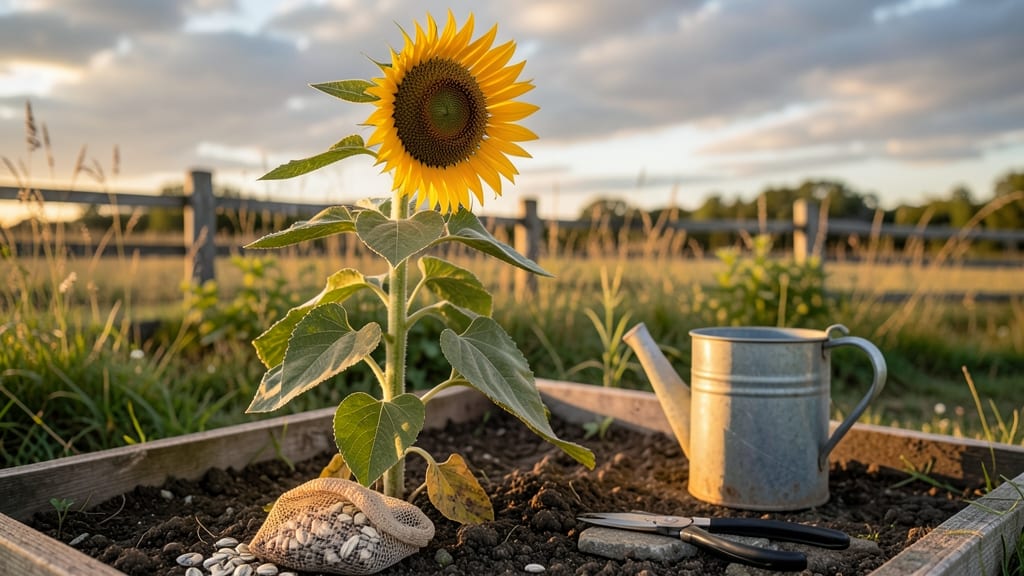
You can broadcast sunflower seeds but must space them carefully—12-24 inches apart—to avoid overcrowding, which restricts sunlight, stunts growth, and limits flower head development. Thin seedlings later to maintain proper spacing.
Sunflowers thrive when they have room to spread, and broadcasting seeds without planning can lead to competition for nutrients and light. 🌻 The key is to scatter seeds lightly and thin seedlings once they reach 4-6 inches tall, ensuring each plant gets enough sunlight for strong stems and large blooms.
I’ve seen gardens where overcrowded sunflowers grow tall but produce tiny, underdeveloped heads—so spacing is just as important as the seeds themselves.
For best results, aim for 1 seed per square foot when broadcasting, then thin to 1 plant per 2-3 square feet once they’re established. This method works well in large garden beds or fields but may require more effort in smaller spaces.
Always check your variety’s mature size—tall varieties like 'Mammoth' need more room than dwarf types.
💡 In This Article
- How Sunflower Seed Spacing Affects Plant Health
- Best Techniques for Broadcasting Sunflower Seeds
How sunflower seed spacing affects plant health
Sunflower growth depends heavily on two critical factors: photosynthesis efficiency and root competition. When seeds are crowded too closely, seedlings compete aggressively for sunlight, which sunflowers need for their massive leaves to produce energy.
Each sunflower head requires 10-12 hours of direct sunlight daily—when plants are too close, the inner leaves become shaded, reducing chlorophyll production by up to 40% compared to properly spaced plants.
This shading stress triggers a survival response where the plant diverts energy to vertical growth rather than head development.
The root systems of sunflowers are equally affected. A single mature sunflower can develop roots reaching 3-5 feet deep, but when plants are crowded, their root zones overlap. This creates a nutrient race where seedlings absorb phosphorus and nitrogen faster than the soil can replenish, leading to stunted growth.
Studies show that sunflowers spaced 12 inches apart produce roots that are 30% larger than those in crowded conditions, giving them better access to water and minerals during drought stress.
Broadcasting seeds creates another challenge: uneven germination rates. Sunflower seeds typically germinate at 70-90% efficiency when planted 1 inch deep, but broadcasting means some seeds may land too shallow or too deep. Shallow seeds dry out quickly, while deeply buried seeds may not emerge at all.
The result is a patchy stand where some areas have dense clusters while others have gaps—both scenarios create growth imbalances. Direct seeding (planting seeds 12-18 inches apart in rows) avoids this by ensuring consistent depth and spacing from the start.
Here's what happens when you don't thin properly: Overcrowded sunflowers develop weak stems that can't support their own weight, leading to lodging (falling over). Their flower heads also become smaller and less dense because the plant prioritizes survival over reproduction.
In extreme cases, crowded sunflowers may produce no viable seeds at all. The ideal scenario is a 1:1 ratio of plants to space, where each has access to 12-24 inches of open soil area for root expansion and sunlight penetration.
Consider this comparison: A properly spaced sunflower (with 18-inch spacing) can reach 10-12 feet tall with a 12-inch diameter head, while a crowded plant of the same variety might only grow 6-8 feet tall with a 6-inch head.
The difference comes down to energy allocation—space allows the plant to invest in both structure and reproduction, whereas overcrowding forces it to choose one or the other. 🌻
One nuance to remember: Dwarf sunflower varieties (like 'Teddy Bear') tolerate slightly closer spacing (10-12 inches) because their mature height is 2-3 feet, while giant varieties (like 'Russian Giant') need 24+ inches to prevent stem breakage.
Always check your seed packet for variety-specific recommendations, as these differences can mean the difference between a thriving garden and a disappointing one.